When black and white prints work better than colour
Your living room already has its colours: the rug, the cushions, the timber floor. A black and white print gives the wall presence without…
By Anne N.
May 21, 2026 | 10:00 AM AEST
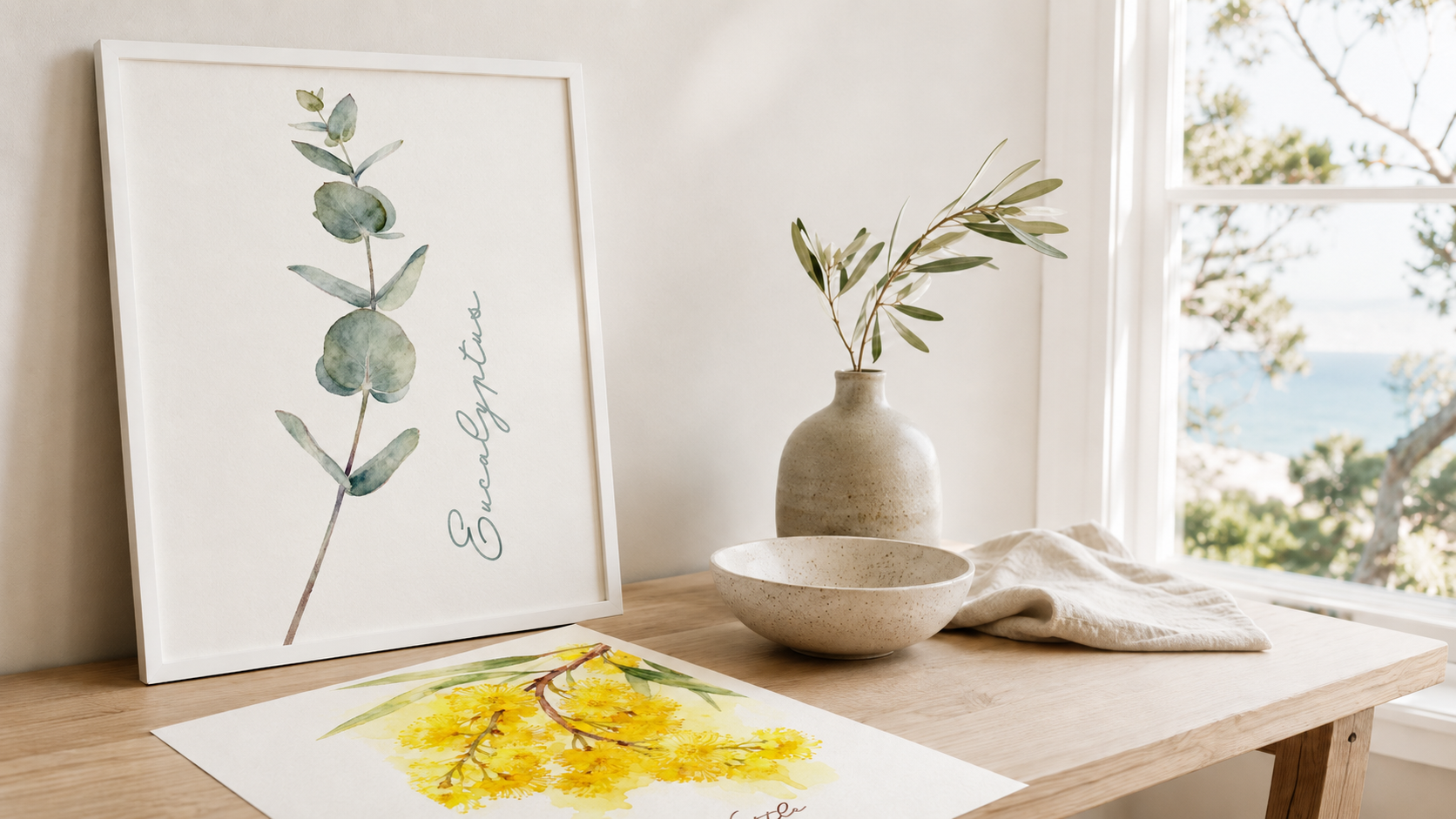
(Featured image: A framed eucalyptus print leaning on a light timber styling table beside a bright coastal window, with a wattle print, ceramic textures, olive foliage, linen details, and soft natural light. Photo by VanVakarnee.)
Botanical wall art can look simple at first.
A leaf. A flower. A stem. A branch. But the right botanical print does more than fill a blank wall. It changes how a room feels.
Eucalyptus can make a bedroom feel softer without adding much colour. Wattle can bring warmth to a dining room or entryway. Floral wall art can lift a guest room, reading corner, or hallway that feels unfinished.
The trick is choosing botanical art that belongs with the room around it. The print should work with the furniture, the light, the wall colour, and the way the space is actually used.
This guide walks through how to style Australian native botanical wall art prints, including eucalyptus, wattle, snapdragon, sea lavender, and floral pieces from the VanVakarnee botanical collection.
Before choosing a botanical print, look at the room without thinking about art.
Is the space already warm because of timber floors, oak furniture, woven rugs, or cream bedding? A yellow wattle print might strengthen that warmth.
Is the room pale, simple, and a little empty? Eucalyptus can add shape without making the wall feel crowded.
Is the space missing colour altogether? A floral print can bring softness and movement without needing new furniture.
Botanical wall art works best when it supports the room instead of fighting it. A print should not feel like it was chosen because the wall was blank. It should feel like it explains the room a little better.
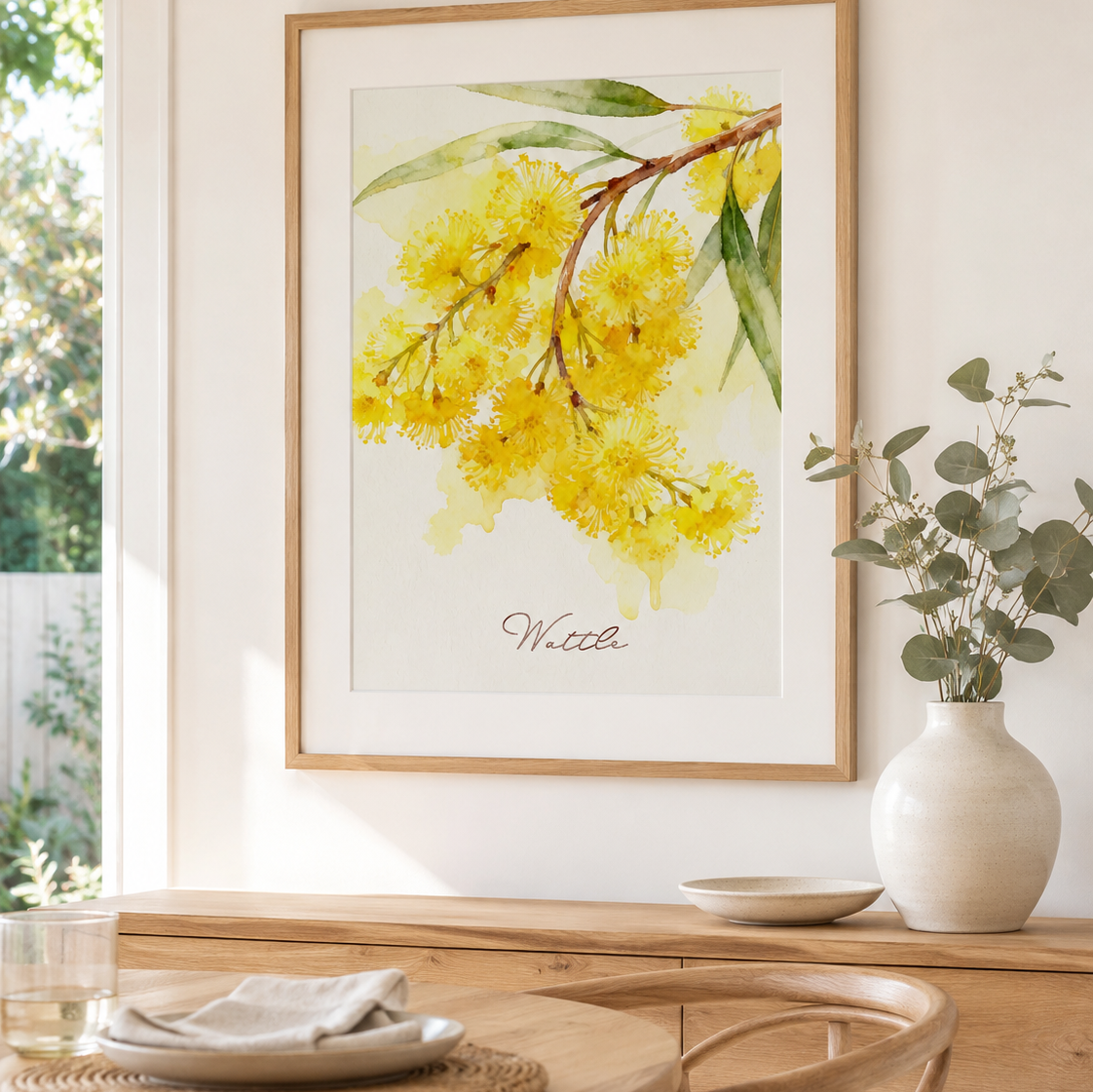
(Image: Golden Wattle wall art print styled above light timber dining furniture with a ceramic vase, white walls, and warm daylight. Photo by VanVakarnee.)
Wattle is one of the easiest botanical subjects to use when a room needs warmth.
The yellow blossoms catch the eye, but the branches and green leaves keep the artwork connected to nature. That makes wattle useful in dining rooms, kitchens, entryways, and living rooms where the wall needs a lift.
A Golden Wattle print can sit beautifully above timber furniture because the yellow flowers pick up the warmth of the wood. It also works near ceramics, linen, woven placemats, and soft natural light.
The key is not to overdo the yellow. You do not need yellow cushions, yellow flowers, and yellow decor everywhere. Let the artwork carry that part of the room.
A single warm detail nearby is enough.
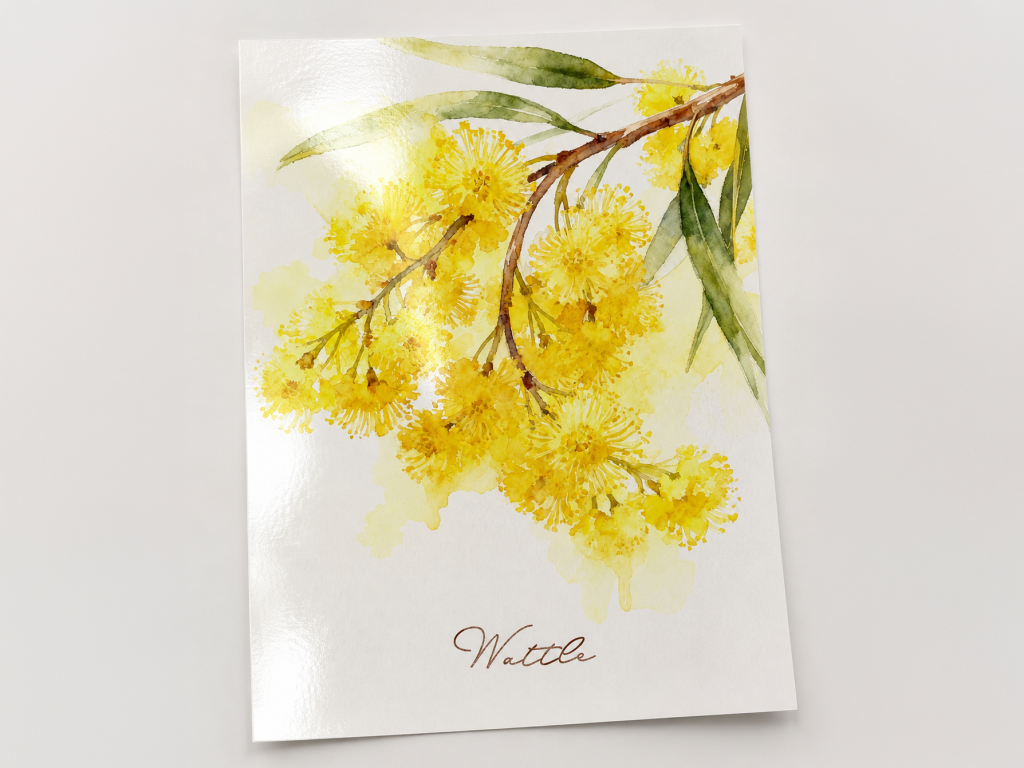
(Image: Close-up of the Golden Wattle botanical wall art print showing yellow wattle flowers, green leaves, brown branches, and soft watercolour detail. Photo by VanVakarnee.)
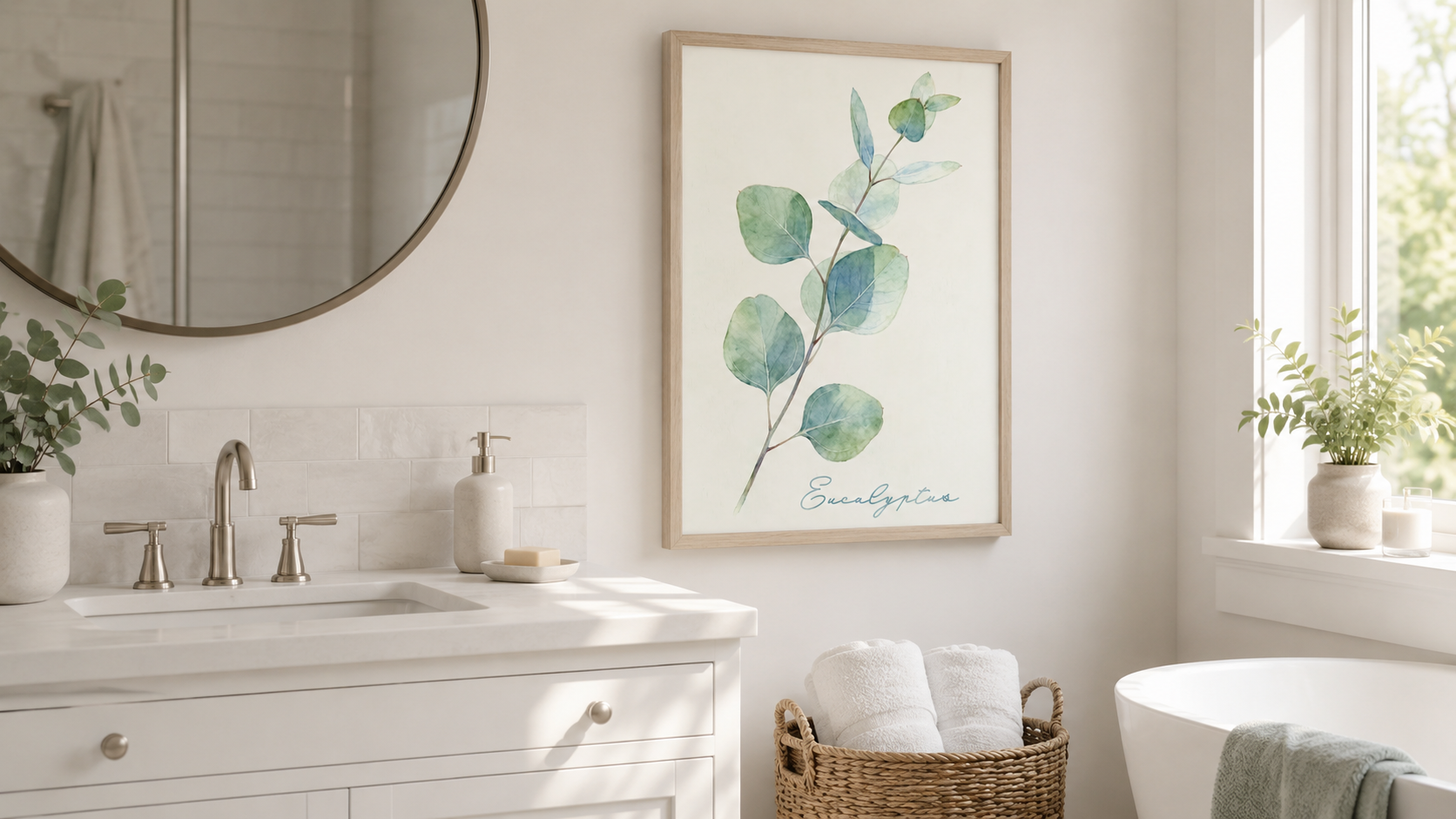
Eucalyptus is quieter than wattle.
That is why it works so well in bedrooms, hallways, home offices, and living spaces where the room already has enough going on.
Round eucalyptus leaves bring soft shape. Longer eucalyptus stems add height and direction. Blue-green eucalyptus tones sit easily with white, beige, timber, cream, sage, stone, and linen.
This makes eucalyptus wall art a safe starting point if you want botanical artwork but do not want the room to feel too floral.
In a bedroom, eucalyptus works especially well above a bed or beside a timber bedside table. It adds something natural to the wall without pulling too much attention first thing in the morning.
Hallways and entryways often need art, but not too much art.
A large floral piece can sometimes feel too decorative in a narrow space. A eucalyptus print is usually easier. It gives the wall height, movement, and natural colour without making the entry feel crowded.
This is where a single stem or branch composition works well. The eye can follow the line of the leaves as you move through the space.
If the entryway has a console table, keep the styling simple. A ceramic bowl, timber surface, and one vase of greenery are enough. The artwork should be the main detail.
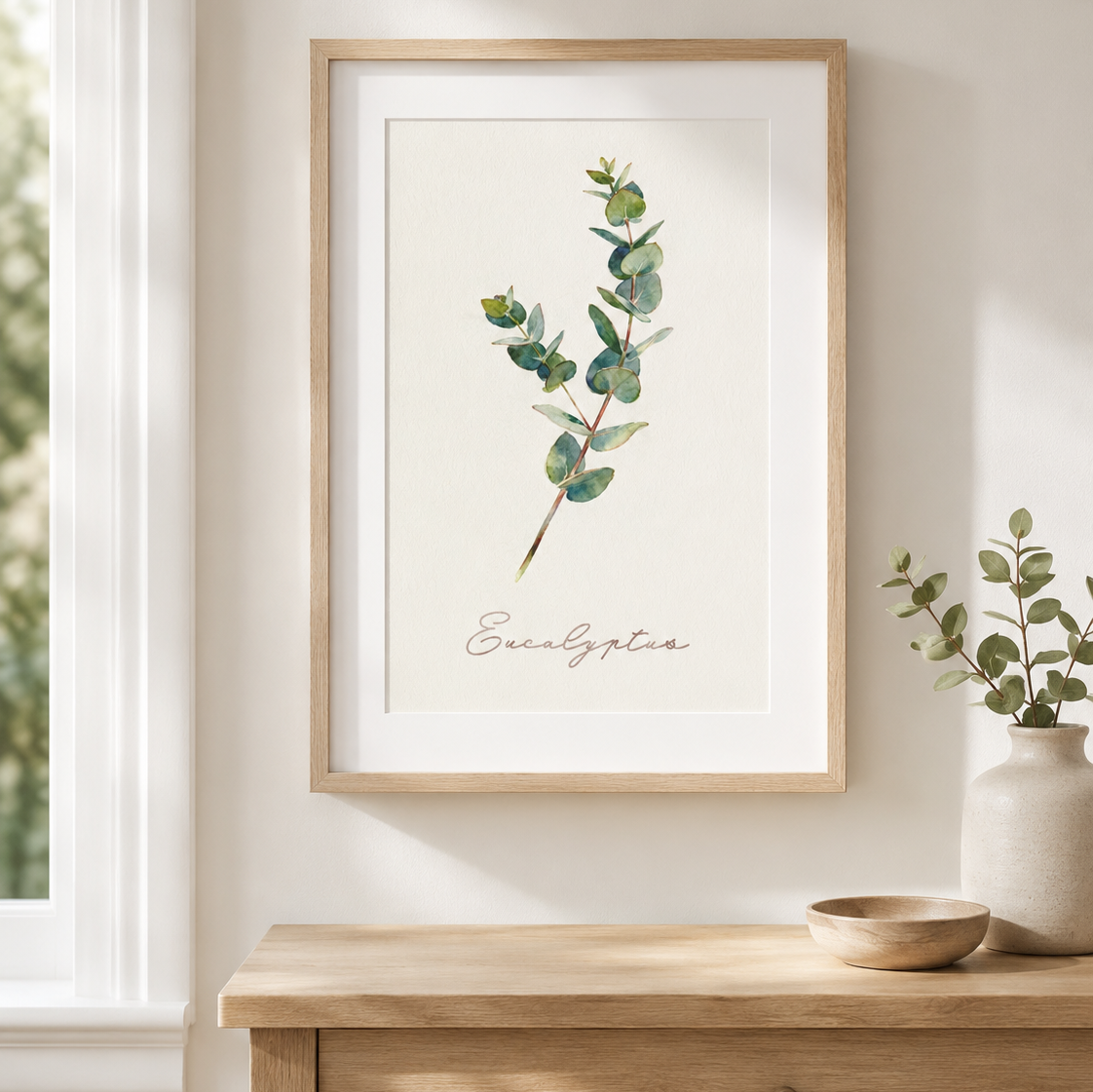
(Image: Single eucalyptus wall art print styled above a light timber console table with a ceramic bowl, soft daylight, and pale walls. Photo by VanVakarnee.)
Floral botanical wall art has a different role.
It brings more colour, more movement, and usually more emotion into a room. That can be beautiful in a bedroom, guest room, dressing area, or quiet corner.
Snapdragon, sea lavender, roses, lilies, tulips, and mixed floral arrangements all create a softer feeling than eucalyptus. They work best when the rest of the room gives them space.
White bedding, timber furniture, cream walls, stoneware, and simple curtains are good companions for floral botanical prints. If the room is already full of pattern, the floral artwork may have to compete.
Let one floral print be the main colour moment.
Not every floral print needs to be pink, red, or yellow.
Sea lavender is useful because the purple and blue tones feel gentle on the wall. It can add colour to a hallway, bedroom, or reading corner without making the room feel overly bright.
It works especially well with pale timber, white walls, woven rugs, cream ceramics, and green stems in a vase. The colour is noticeable, but it does not dominate the space.
That makes it a strong choice when you want botanical wall art that feels floral, but still easy to live with.
Some floral prints are better as statement pieces.
A large rose or mixed flower print can work above a bed because the bed gives the artwork something to relate to. The frame should feel connected to the width of the bedhead, not too small or too high above it.
If the floral artwork has strong pink, red, purple, or yellow tones, keep the bedding simple. White, cream, beige, or soft blush can work well.
The print should feel like the main decorative piece in the room, not one of many competing details.
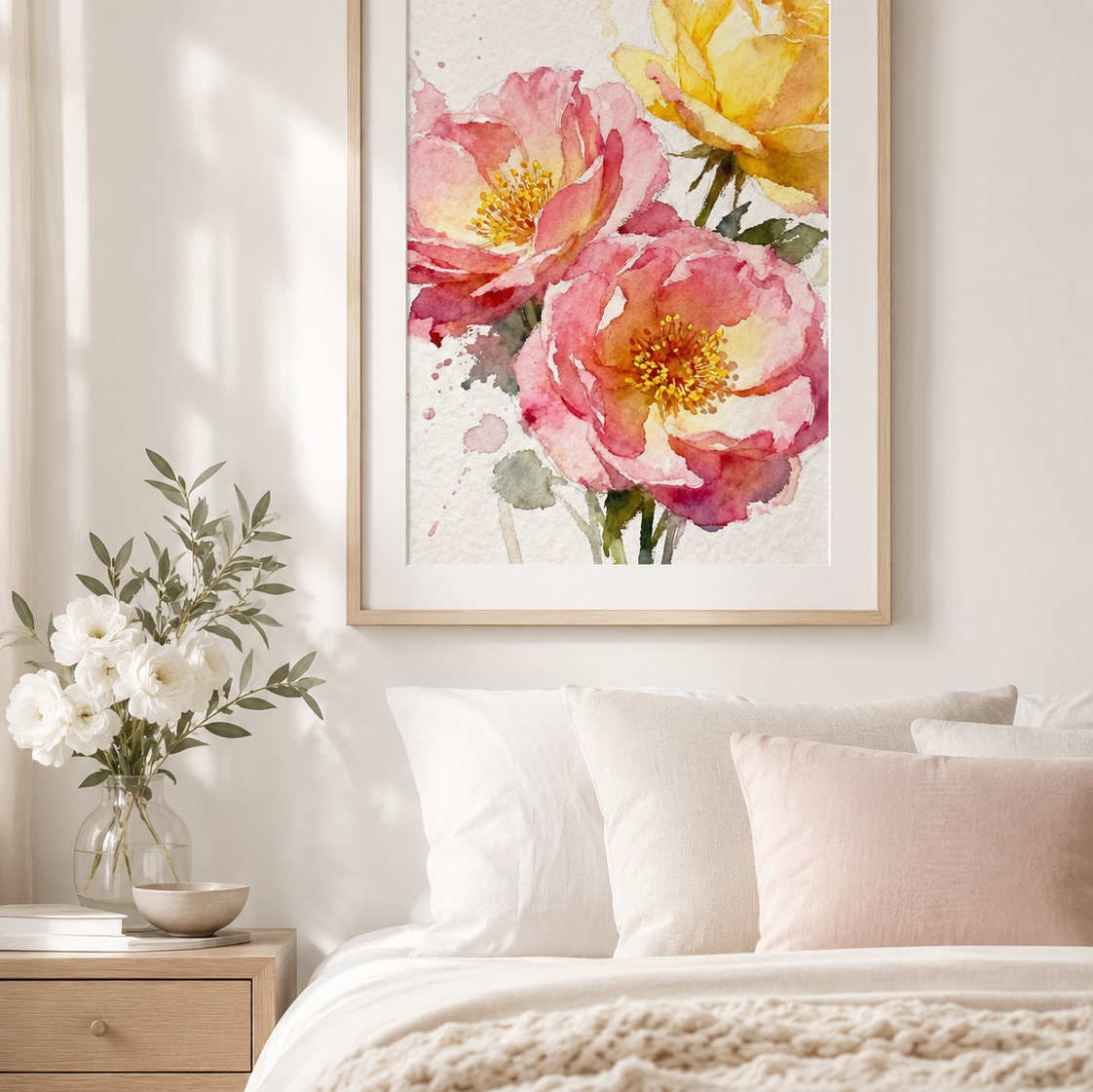
(Image: Floral wall art print with pink and yellow flowers hanging above a bed with white linen, soft pillows, timber furniture, and warm window light. Photo by VanVakarnee.)
People often think botanical wall art means green leaves.
It can, but it does not have to.
A red floral bouquet, yellow wattle branch, or pink rose print can still be botanical. The difference is that these pieces bring more warmth and colour into the room.
This is useful in spaces that feel too plain or washed out. A floral botanical print can bring life to a cream wall, especially when the room has timber furniture and simple bedding or seating.
The safest way to use a stronger floral print is to keep the frame simple. Pale timber and white matting allow the artwork to carry the colour without making the wall feel heavy.
A common wall art mistake is choosing prints that are too small.
This happens often above beds, sofas, sideboards, and dining benches. The artwork may look good on its own, but once it is placed above furniture, it can feel disconnected.
One larger botanical print often works better than three small pieces scattered across the wall.
The print should relate to what sits below it. Above a bed, it should feel connected to the bedhead. Above a console, it should feel wide or tall enough to hold the space. Above a dining bench, it should have enough presence to be seen from across the room.
If you do use more than one botanical print, choose pieces that share a similar feeling. For example, eucalyptus and wattle can work together because both have natural branch movement. Floral prints can join them if the paper tone, frame, and softness of the artwork feel related.
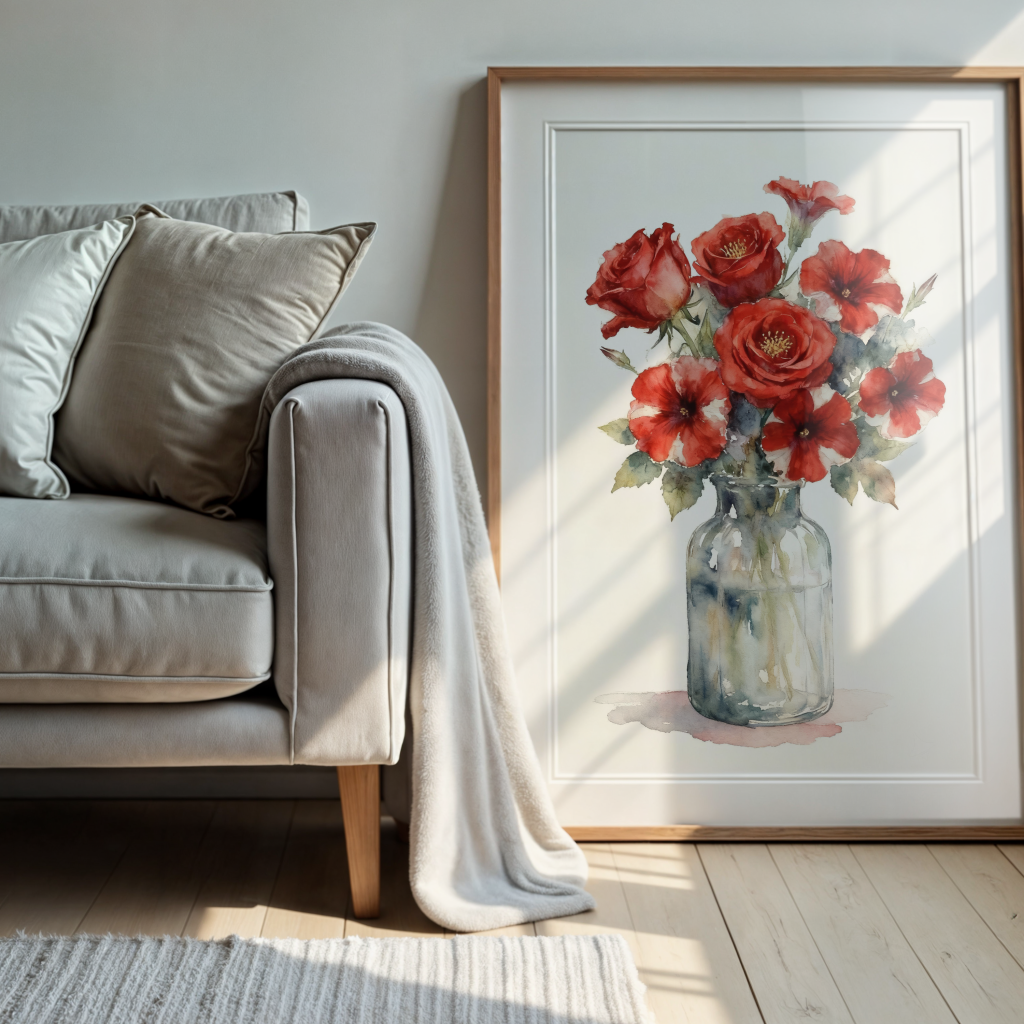
(Image: Red floral bouquet wall art print in a pale timber frame leaned against the wall next to a gray couch with a throw blanket hanging over the edge. Photo by VanVakarnee.)
A good way to choose is by room.
For bedrooms, start with eucalyptus, sea lavender, soft floral prints, or lighter watercolour pieces.
For dining rooms, look at Golden Wattle, warm floral prints, or artwork with yellow and green detail.
For hallways, choose eucalyptus, single stems, or vertical botanical pieces.
For living rooms, choose one larger print with enough presence to hold the wall.
For guest rooms, floral botanical prints can work especially well because they make the room feel more finished without being too personal.
For home offices, eucalyptus and simpler botanical forms are usually easier to live with than very bright floral artwork.
The finish changes how botanical artwork feels.
A framed paper print gives the artwork a more classic, collected look. It works well for watercolour-style botanical art because the mat and frame give the image space to breathe.
Canvas gives the piece more presence on the wall. It can work well in living rooms, dining rooms, and larger spaces where the artwork needs to feel more substantial.
For detailed botanical pieces, framed paper is often the most flexible choice. It lets you choose a frame that suits the room, whether that is pale timber, white, black, or another finish.
Canvas is better when you want the piece to feel finished straight away and do not want to think about framing.
If you are building a room around more than one botanical print, keep the combination simple.
A eucalyptus print and a wattle print can work well together because one brings green structure and the other brings warmth.
A eucalyptus print and a soft floral print can work in a bedroom because one keeps the wall grounded while the other adds colour.
A wattle print and a floral print can work in a dining room or guest room if the colours are warm and the frames match.
The frame is important. Two very different botanical subjects can still sit together if the framing, paper tone, and scale feel consistent.
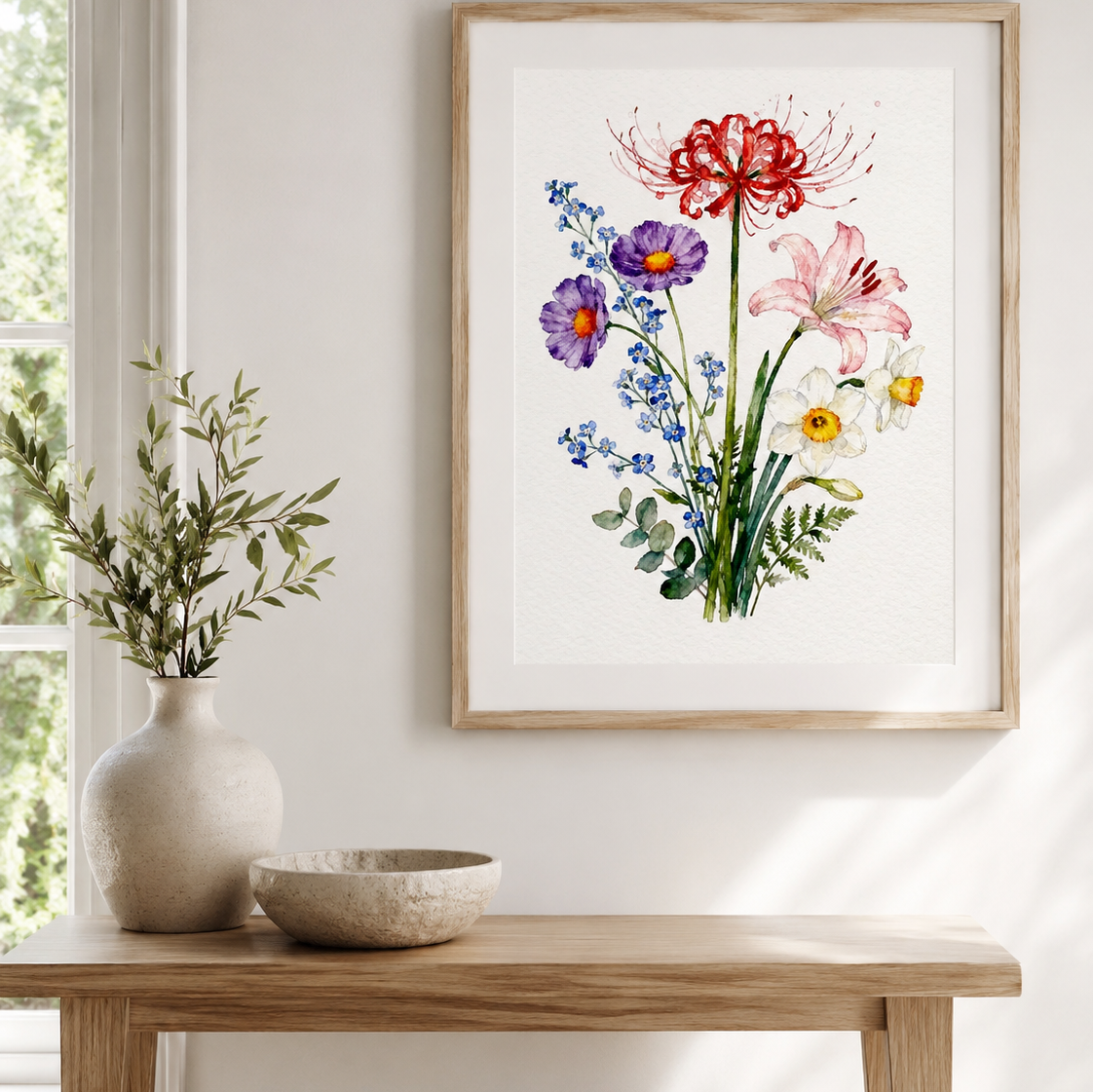
(Image: Botanical wall art print styled in a bright room with light timber furniture, a ceramic vessel, and soft natural textures. Photo by VanVakarnee.)
Australian native botanical wall art works because it brings nature into the room without needing the room to become themed.
Eucalyptus gives shape and softness. Wattle adds warmth. Sea lavender brings gentle colour. Floral prints add movement and a more decorative feeling.
The best choice depends on the room.
Start with the space, not the print. Look at the furniture, the light, the wall colour, and the feeling the room already has. Then choose the botanical artwork that makes that feeling clearer.
If the room needs calm shape, choose eucalyptus. If it needs warmth, choose wattle. If it needs softness and colour, choose floral botanical art.
Browse the VanVakarnee Botanical Art collection to explore eucalyptus prints, wattle artwork, floral wall art, and botanical pieces for bedrooms, living rooms, hallways, dining rooms, and relaxed Australian interiors.
Botanical wall art is artwork that features plants, flowers, leaves, stems, branches, seed pods, or other natural plant forms. It can be detailed and realistic, or softer and more decorative.
Yes. Eucalyptus wall art works well in bedrooms because the green and blue-green tones sit easily with white bedding, timber furniture, linen textures, and soft wall colours.
Wattle wall art works well in dining rooms, entryways, kitchens, and living rooms because the yellow flowers bring warmth without needing a bright wall colour.
Yes. Eucalyptus and floral prints can work together if the frames, paper tones, and overall softness feel connected. Eucalyptus brings structure, while floral artwork adds colour.
Botanical wall art often looks good framed because the mat and frame give the artwork space. Pale timber frames work especially well with eucalyptus, wattle, and watercolour-style floral prints.
Choose the size based on the furniture below it. Above a bed, sofa, console, or dining bench, the artwork should feel connected to the furniture rather than floating alone on the wall. Larger single prints usually work better than very small pieces.
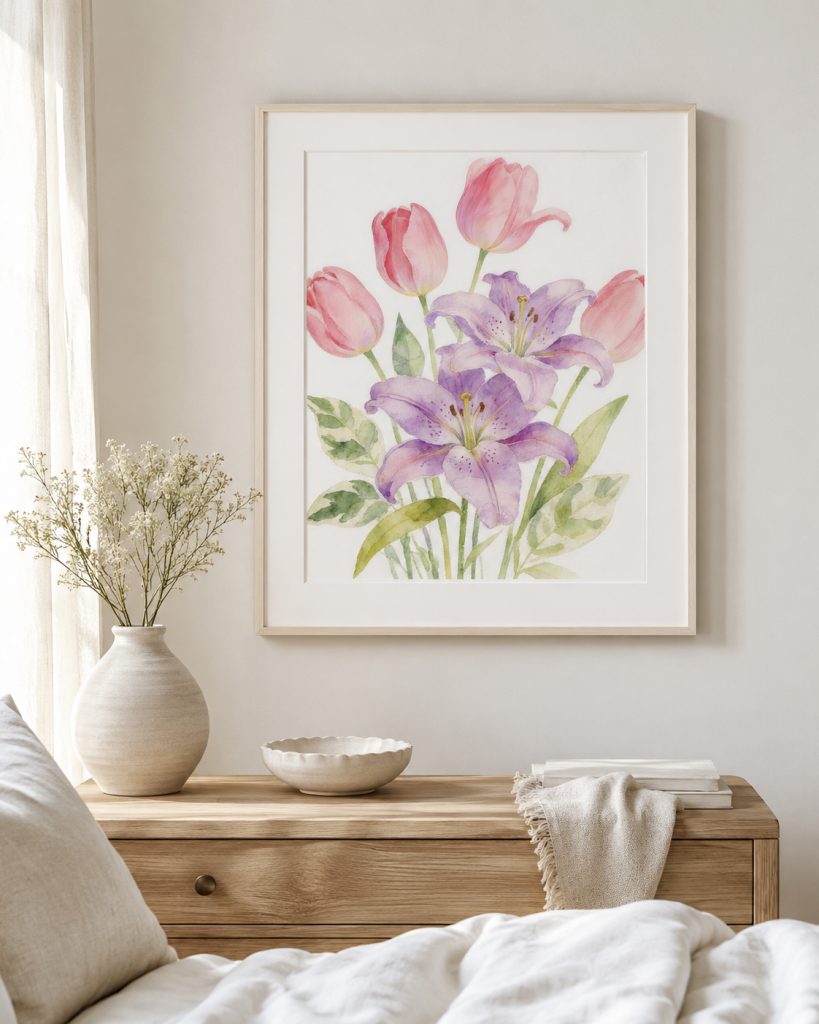
(Image: Mixed botanical flower soft watercolour wall art print styled above a timber dresser with neutral ceramic decor in a bedroom. Photo by VanVakarnee.)