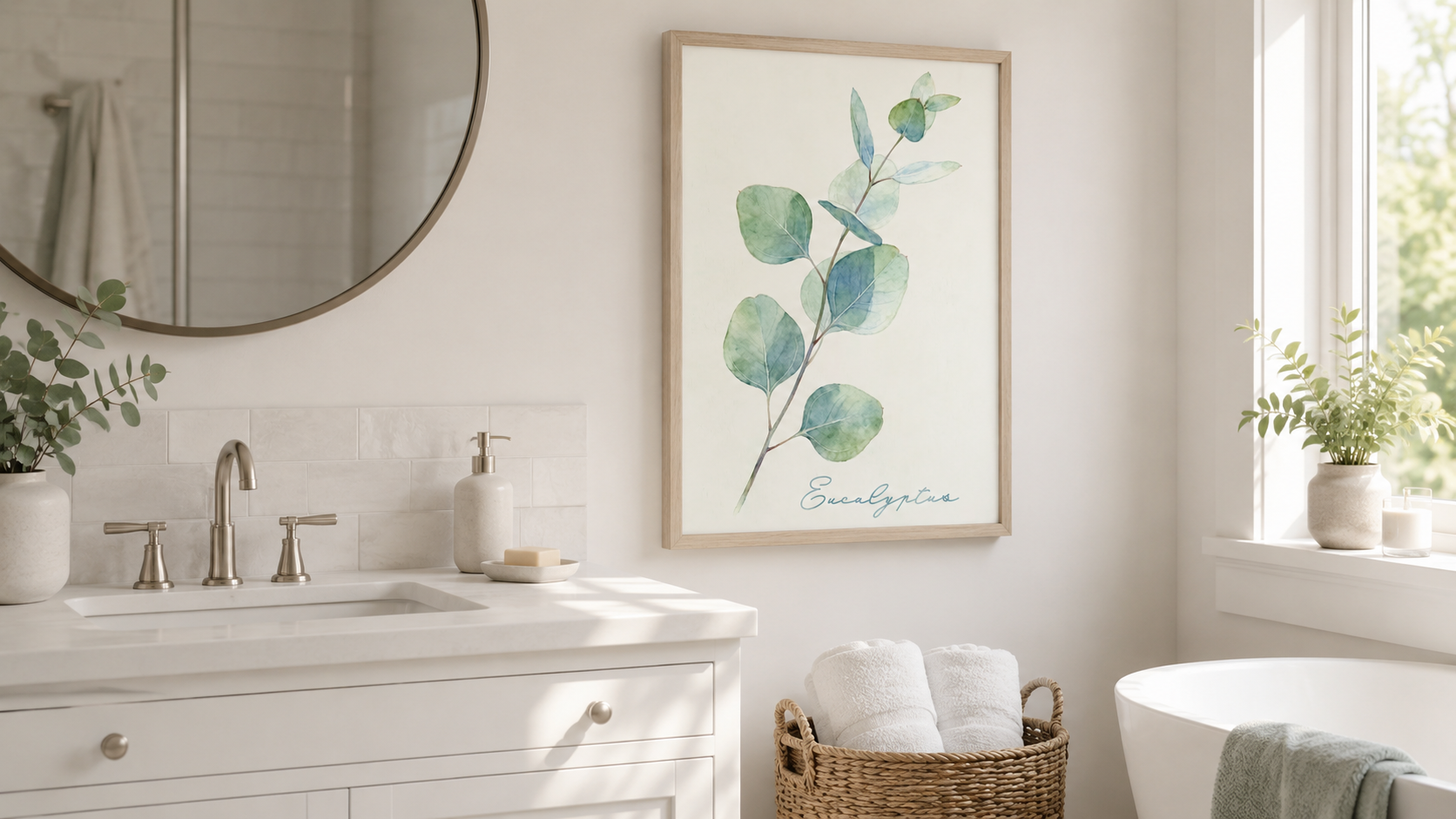
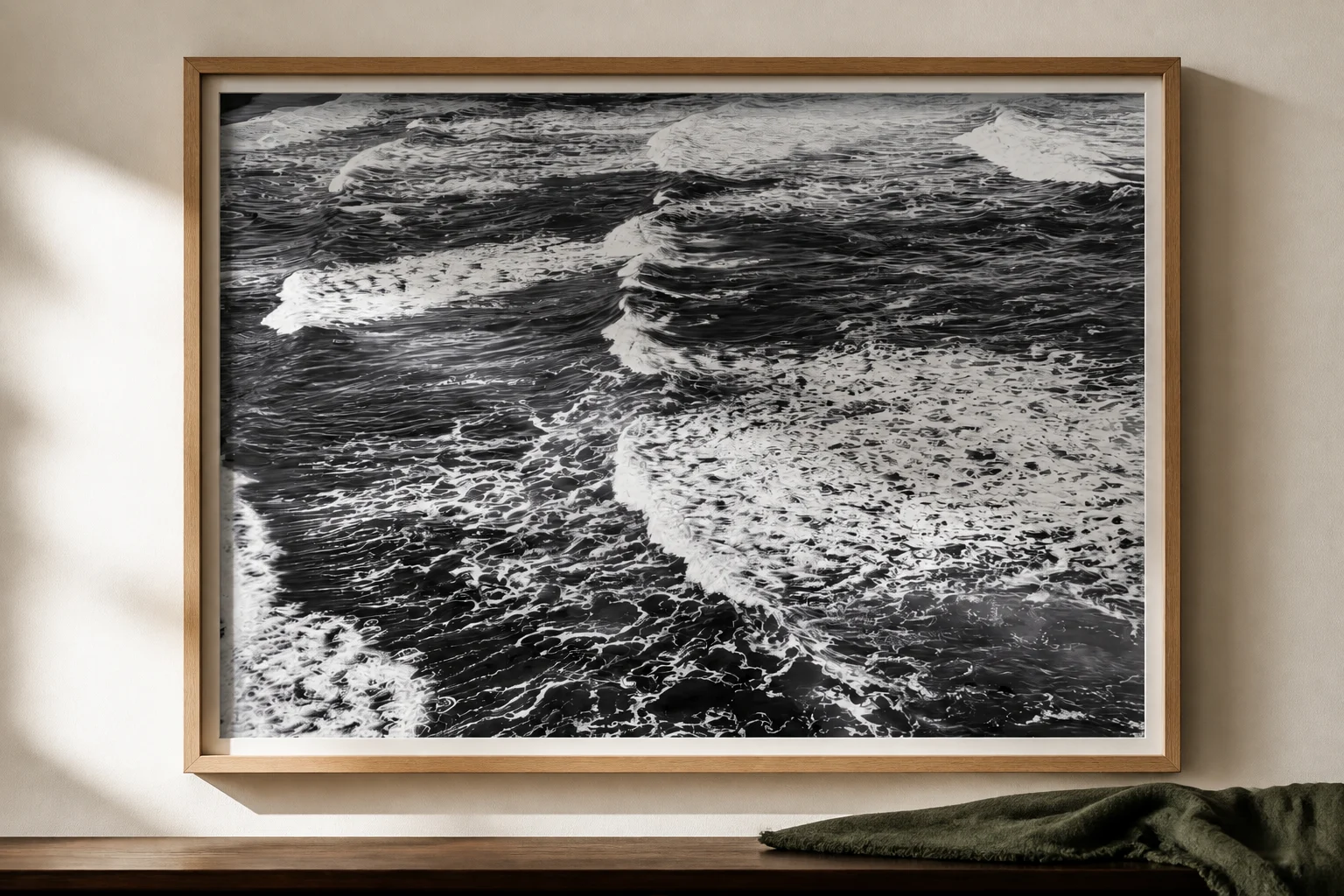
When black and white prints work better than colour
Your living room already has its colours: the rug, the cushions, the timber floor. A black and white print gives the wall presence without…
By Anne N.
May 17, 2026 | 10:00 AM AEST
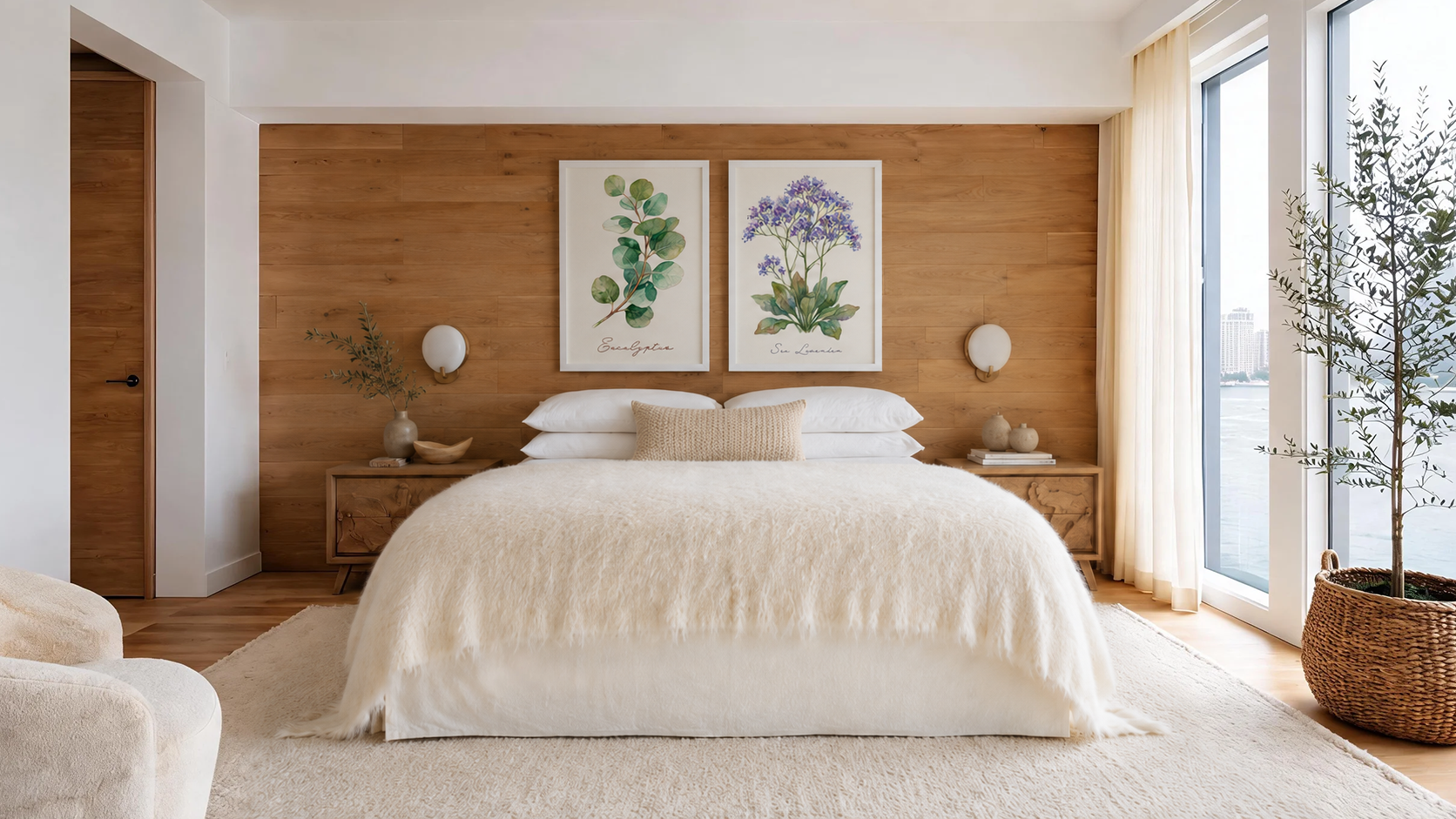
(Featured image: Two botanical wall art prints, Sea Rise and Round Eucalyptus, hanging above a soft neutral bed against a timber feature wall, with cream bedding, natural textures and warm window light. Photo by VanVakarnee.)
Botanical wall art works best when it does more than add leaves or flowers to a blank wall.
A strong botanical print should bring shape, texture and natural detail into the room. It should feel considered, not decorative for the sake of it. The best pieces often have a quiet kind of structure: a stem leaning across the frame, a flower head catching light, a group of leaves creating movement, or a small natural detail that makes the room feel more finished.
That is why botanical art suits so many Australian homes. It works with timber, stone, linen, rattan, white walls, coloured walls, older homes, new builds, apartments, holiday rentals and home offices. It can soften a plain room without making it feel themed.
Botanical art also has a long history beyond home styling. Royal Botanic Gardens, Kew describes botanical illustration as an artform closely connected with plant study and scientific record keeping. Kew’s own illustration collection includes more than 200,000 prints and drawings, showing how important plant imagery has been across art, science and design.
This guide walks through how to choose botanical wall art by room, subject, size and finish, with practical examples from the VanVakarnee wall art collection.
For this article we will be using VanVakarnee prints as examples because they fit the botanical theme well, but the same principles apply to any botanical print you choose.
Botanical wall art is not just art with plants in it.
The strongest pieces pay attention to the shape of the subject. Eucalyptus leaves have a different rhythm to cherry blossoms. Wattle has a different visual weight to a sunflower. Ferns, stems, seed pods and petals all behave differently in a composition.
That is what gives botanical artwork its strength. It brings nature inside, but it also gives the wall structure.
A botanical print might add:
Natural colour
Fine detail
Movement
Texture
A softer edge beside hard furniture
A stronger connection between indoor spaces and the garden outside
This is why botanical wall art can suit both simple rooms and layered rooms. It does not need to dominate. It just needs to belong.
Browse the full Botanical Art collection for eucalyptus prints, wattle artwork, floral pieces and leafy wall art designed for bedrooms, living rooms, hallways and relaxed Australian interiors.
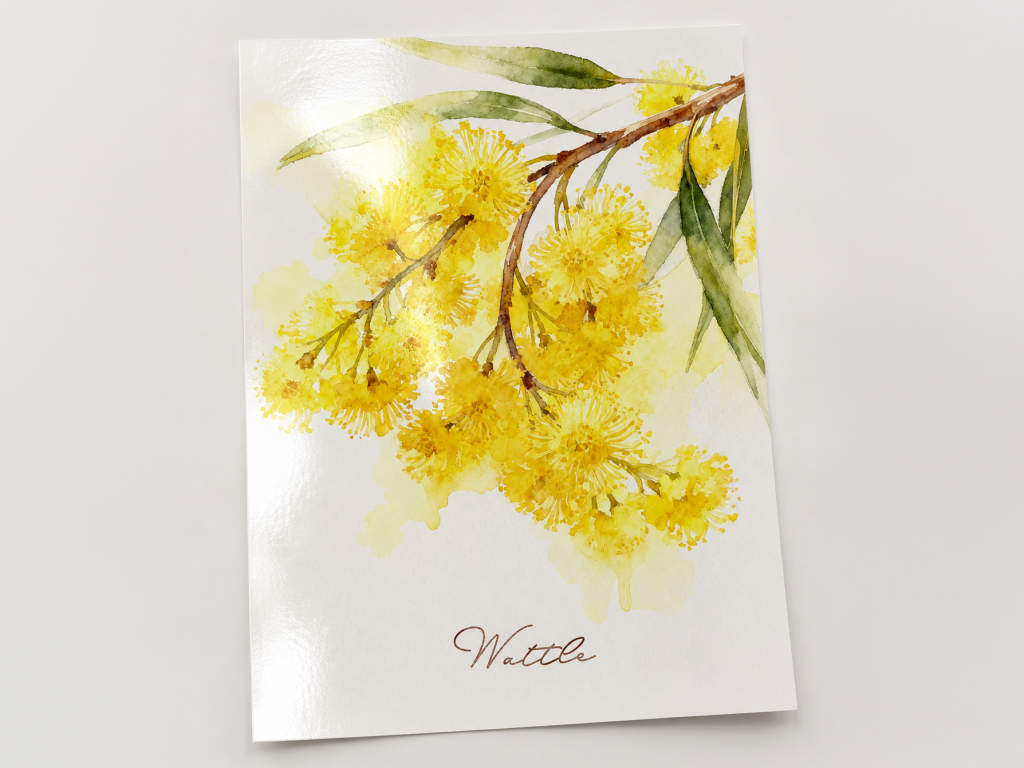
(Image: A close-up of the Golden Wattle botanical wall art print on high-quality gloss paper, showing bright yellow wattle flowers, green leaves, soft paper texture and subtle light reflection. Photo by VanVakarnee.)
A botanical print might look beautiful on its own, but the real question is whether it suits the room.
A living room usually needs a piece with enough scale to connect with the furniture below it. A bedroom often works better with softer contrast and less visual tension. A hallway can handle a narrow vertical piece. A home office benefits from artwork that gives the eye somewhere natural to rest between tasks.
Before choosing a print, look at the wall and ask what the space needs.
Does the wall need more warmth?
Does the room need softer shapes?
Does the furniture feel too hard or square?
Does the space need colour without using paint?
Does the artwork need to photograph well for a rental or listing image?
For a plain room, botanical art can add detail. For a busy room, it can create a more settled focal point.
The living room is where botanical wall art can carry the most presence.
If the print is going above a sofa, sideboard or fireplace, choose something large enough to feel connected to the furniture below it. A small print above a large couch can look lost, even if the image itself is strong.
For living rooms, look for botanical prints with clear shape and enough contrast to be seen from a distance. Large leaves, strong stems, floral detail or a clear central subject usually work better than tiny repeated details.
A piece like Golden Wattle can work well when the room needs warmth and Australian plant character. Wattle has a strong seasonal feeling, but it does not have to make the room feel overly floral. Used well, the yellow tones can lift timber furniture, cream walls, olive cushions, tan leather or warm flooring.
For a more leaf-focused room, Twin Eucalyptus or Round Eucalyptus would suit spaces where you want the artwork to feel connected to Australian foliage rather than flowers.
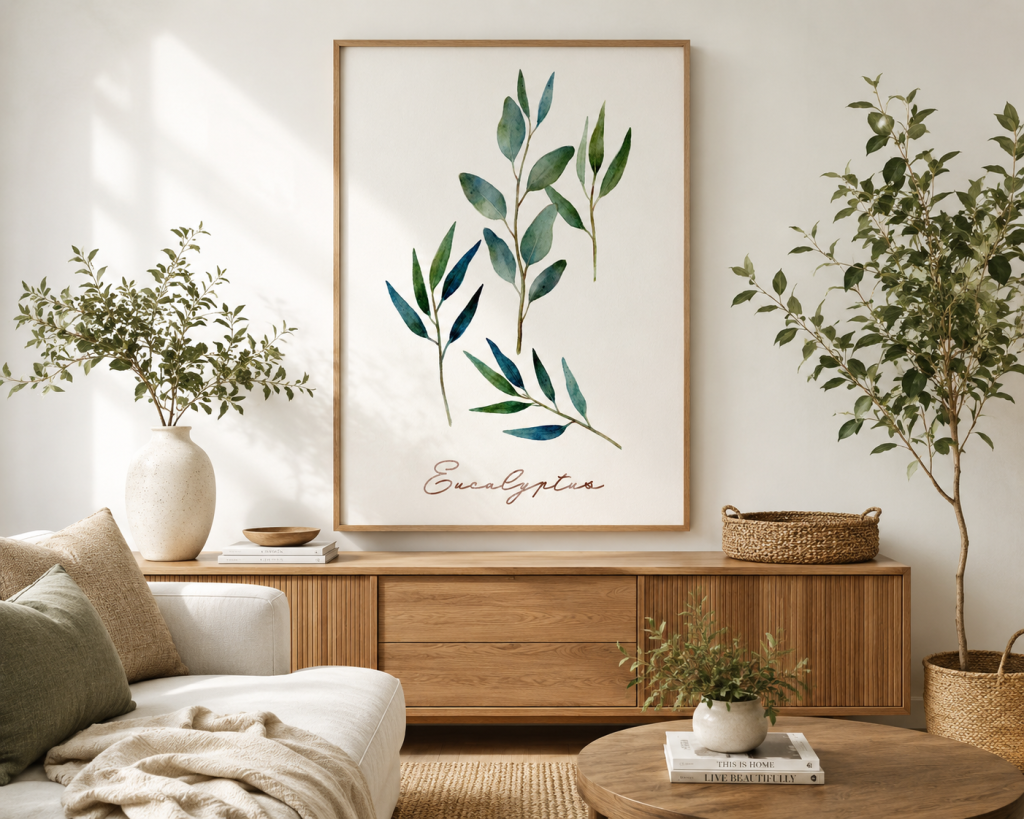
(Featured image: Quiet Eucalyptus botanical wall art print above a timber sideboard, styled with linen cushions, indoor plants, woven baskets and soft natural window light. Photo by VanVakarnee.)
Bedroom wall art should make the room feel finished without making the eye work too hard.
This is where botanical prints are especially useful. Leaves, stems and flowers bring natural movement, but they can still feel gentle enough for a bedroom when the colours and composition are not too sharp.
For bedrooms, look for:
Softer greens
Light botanical detail
Simple plant forms
Lower contrast
Subjects with space around them
Prints that do not feel crowded
A piece like Icy Leaves would suit bedrooms with white bedding, pale timber, grey-green accents, cream walls or simple bedside styling. Cooler leaf tones can make a bedroom feel more restful without making the room look empty.
If the bedroom already has colour through bedding, rugs or curtains, eucalyptus-style prints are often easier to use than bright florals. The leaf forms add interest without competing with the rest of the room.
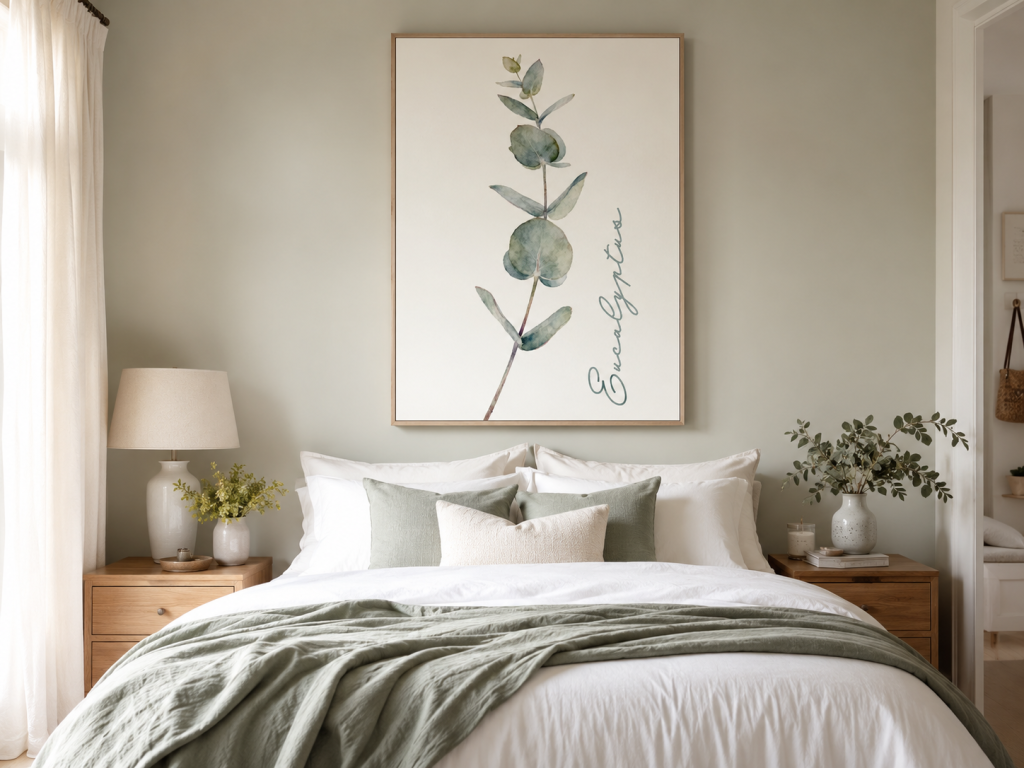
(Image: Pale Eucalyptus botanical wall art print above a calm neutral bed, styled with white bedding, timber bedside tables, green-grey cushions and soft natural window light. Photo by VanVakarnee.)
Hallways and entryways are often overlooked, but they are some of the best places to use botanical art.
A hallway does not always need a large hero piece. It often works better with a vertical print, a pair of related prints, or one botanical piece that gives the wall a clear direction.
Botanical prints work well in these spaces because they add interest without making the entry feel too personal. A plant, flower or leaf subject is easy for visitors to connect with, and it helps the home feel more considered from the first step inside.
For narrow spaces, choose prints with:
Vertical stems
Leaves moving upward or across the frame
Simple backgrounds
Strong shape from a distance
Enough detail to reward a closer look
A eucalyptus print is a natural fit here because the shape of the leaves can guide the eye along the wall.
Botanical wall art works well in dining rooms and kitchens because it connects naturally with food, gardens, flowers, herbs and seasonal colour.
The key is choosing a piece that feels fresh without looking too delicate for the room. Dining spaces can usually handle more colour than bedrooms, especially if the artwork is placed near timber furniture, open shelving, stone benchtops or ceramic tableware.
A floral piece like Bee on Sunflower is a good example of botanical art with warmth and detail. The product page describes it as a bee resting on a sunflower, with yellow, gold, brown and green tones, making it suitable for living rooms, bedrooms, hallways, offices and studio spaces.
That kind of print can work especially well in a kitchen, breakfast nook, dining area or creative workspace because the subject has energy without needing a busy background.
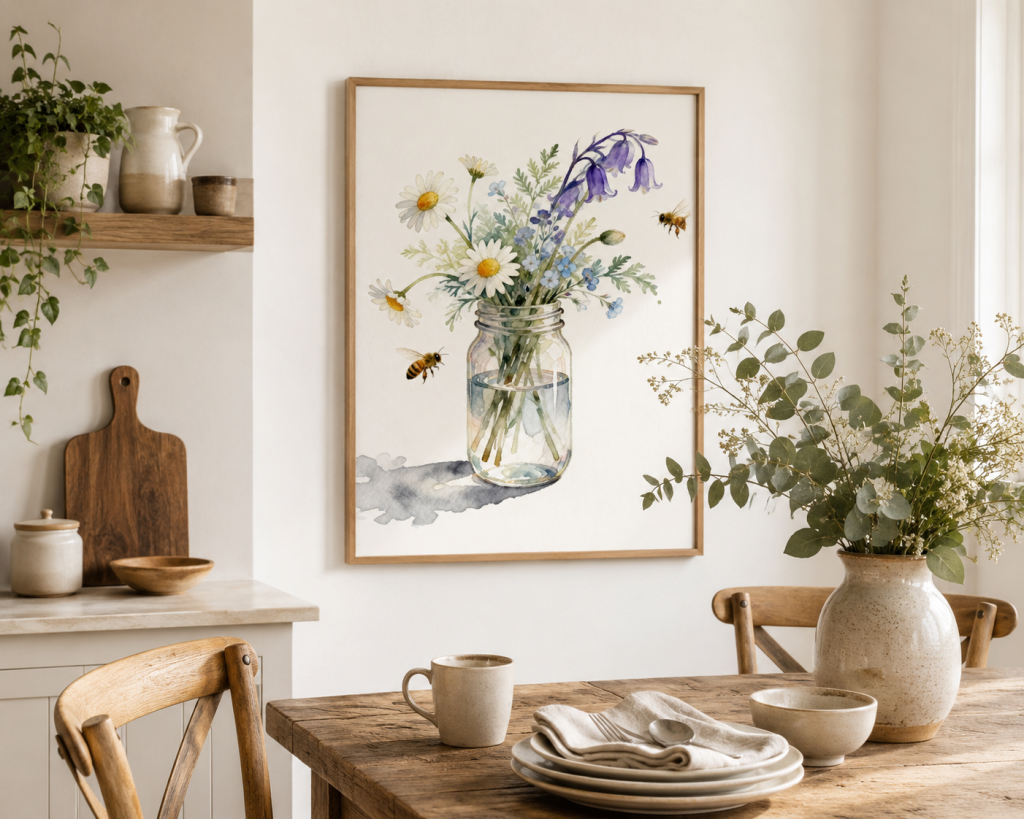
(Image: Wildflower Jar floral botanical wall art print near a warm dining or kitchen space, with soft wildflowers, bees, timber accents, ceramic details and gentle natural light. Photo by VanVakarnee.)
Not all botanical wall art gives the same feeling.
Floral prints usually bring colour, softness and seasonal character. They suit bedrooms, dining rooms, guest rooms and gift-focused spaces.
Leaf prints usually feel more architectural. Eucalyptus, fern and branch-based prints can work well in living rooms, hallways, offices and rooms with timber or stone.
Landscape-based botanical art sits between plant study and scenery. Cherry Blossom View is a good example. The painting features Mount Fuji framed by spring blossoms, with cool blues, violets, pinks and blush tones. It is not a strict plant study, but the blossom detail gives it a strong botanical connection.
That kind of artwork suits rooms where you want a natural subject with more depth than a single flower or leaf.
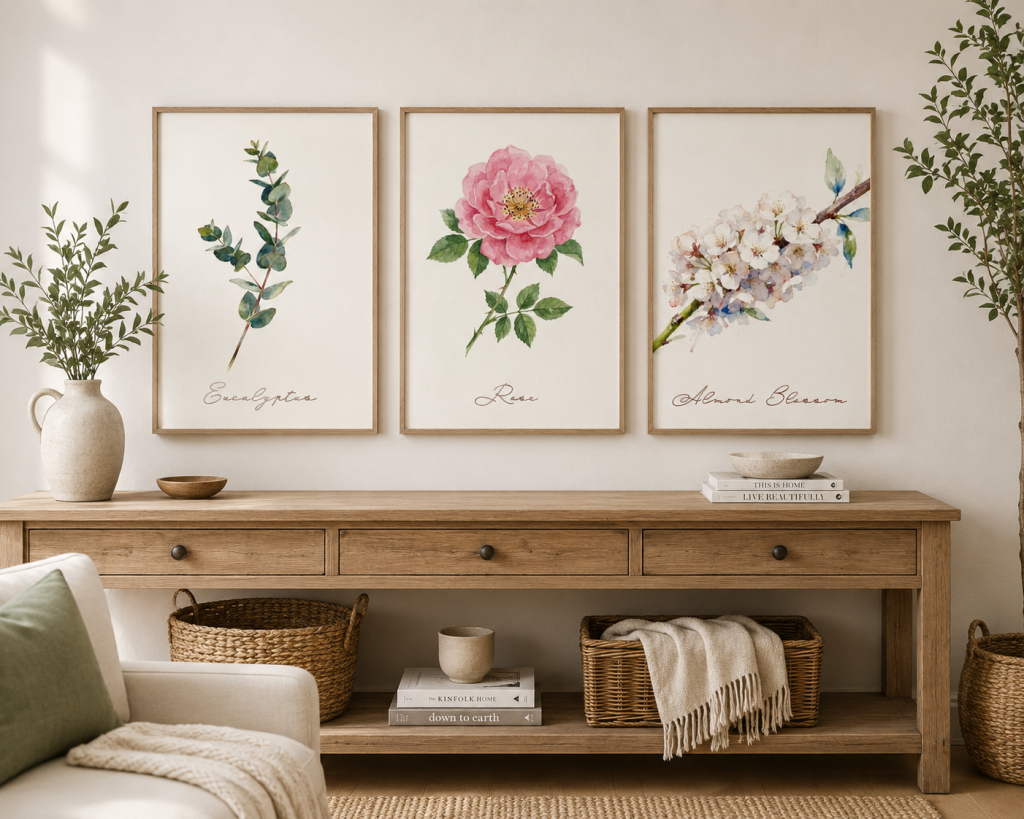
(Image: Three botanical wall art prints, Rose Bloom, Blossom Drift and Twin Eucalyptus, shown together with soft floral details, eucalyptus leaves, pale blossom branches and a calm neutral watercolour style. Photo by VanVakarnee.)
Size changes the way botanical art feels.
A small botanical print can be beautiful, but it needs the right placement. It often works best on a shelf, beside a desk, in a narrow hallway, above a bedside table or as part of a small group.
A large botanical print feels more intentional. It can anchor a sofa, bed, dining area or entryway.
As a guide, artwork above a sofa, bed or sideboard usually looks strongest when it spans around two-thirds of the furniture width. It does not need to be exact, but it should feel visually connected to what sits below it.
For a large living room wall, one bigger botanical piece will usually look more considered than several small unrelated prints. For a hallway, smaller vertical pieces can work because the viewer stands closer to the wall.
The right finish depends on where the print is going and how you want it to sit in the room.
Canvas gives the artwork a stronger presence. It works well for larger pieces, feature walls, holiday homes, living rooms and places where you want the print to feel complete without adding a frame.
Paper prints give more flexibility. They are a good choice if you want to frame the piece yourself, match existing frames, use a mat board, or create a smaller styled arrangement.
For botanical art, both options can work.
Canvas suits larger leaf shapes, strong florals and prints that need to hold a room. Paper suits smaller botanical details, paired prints, gallery walls, desk areas and bedrooms where a framed finish feels more refined.
The easiest mistake with botanical wall art is making the whole room too plant-themed.
A botanical print does not need leaf cushions, floral bedding, plant-patterned rugs and green décor everywhere around it. It usually works better when it has space to breathe.
Use botanical art with natural materials rather than repeating the exact subject too many times.
Good pairings include:
Timber furniture
Linen bedding
Ceramic vases
Stone or concrete surfaces
Woven baskets
Simple indoor plants
Warm white or soft green wall colours
Brass, black or timber frames
The goal is not to make the room look like a garden. The goal is to make the artwork feel connected to the room.
A eucalyptus print beside timber furniture feels natural. A sunflower print near a dining table can feel generous and warm. A blossom print in a guest room can add colour without needing patterned bedding.
Botanical wall art is a strong choice for holiday homes because it is easy for guests to connect with.
It does not feel too personal. It does not rely on family photos, inside jokes or very specific taste. It gives the room a finished look while still feeling broad enough for different guests.
For short-stay properties, botanical prints can help listing photos feel more complete. A print above the bed, near the dining table or in the entryway can make the room look more styled without adding clutter.
For holiday homes, choose botanical pieces that:
Photograph clearly
Have enough size for the wall
Feel connected to the location or interior style
Use colours already present in the room
Avoid tiny details that disappear in listing photos
Australian plant subjects, eucalyptus shapes, wattle tones and natural floral pieces can all work well because they give the room character without needing heavy decoration.
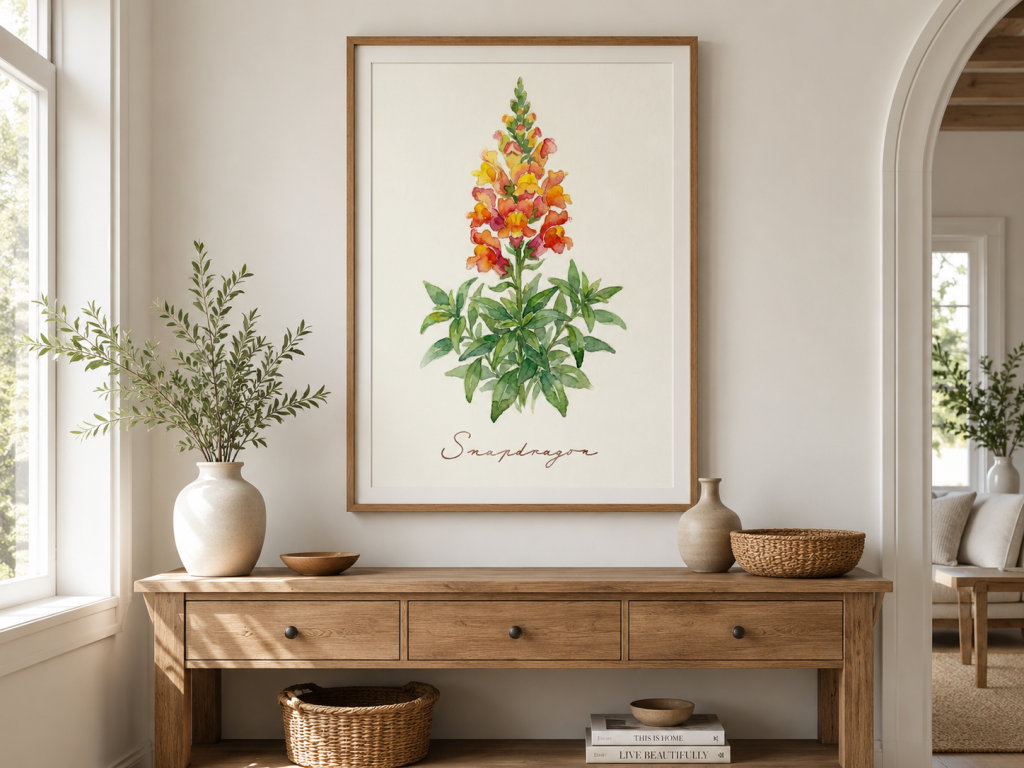
(Image: Snapdragon Flame botanical wall art print above a timber sideboard, styled with warm natural light, ceramic vessels, woven baskets and soft neutral décor. Photo by VanVakarnee.)
Botanical wall art is artwork that features plants, flowers, leaves, stems, trees, seed pods or other natural plant forms. It can include photography, paintings, watercolour-style prints, drawings and landscape-based pieces with strong plant detail.
Botanical wall art works well in living rooms, bedrooms, hallways, dining rooms, kitchens, home offices, guest rooms and holiday homes. The best choice depends on the size of the wall, the amount of colour in the room and whether the artwork needs to be a feature or a quieter supporting piece.
Yes. Eucalyptus wall art suits Australian homes because the leaf shapes, green-grey tones and natural branch forms work easily with timber, linen, stone, white walls and warm interiors. It is also less floral than many plant prints, which makes it easy to use in shared spaces.
Botanical prints can look excellent framed, especially smaller paper prints or pairs of related pieces. Canvas can be a better choice when you want a larger feature piece with more presence and no glass reflection.
Start with the room. For a living room, choose something larger with clear shape. For a bedroom, choose softer leaf forms or lighter florals. For a hallway, choose a vertical piece. For dining rooms and kitchens, warmer floral subjects can work well.
Botanical wall art is at its strongest when it feels observed, not forced.
The right print can soften a living room, finish a bedroom, give shape to a hallway, warm up a dining space, or make a holiday rental feel more considered in photos. Start with the room, then choose the subject, size and finish that suit the space.
Leaves bring structure. Flowers bring colour. Stems bring movement. Botanical landscapes bring depth.
For a simple starting point, look at pieces such as Golden Wattle, Twin Eucalyptus, Icy Leaves, Round Eucalyptus, Bee on Sunflower, or Cherry Blossom View.
Choose the piece that feels like it belongs in the room, not just the one that looks good on its own.