When black and white prints work better than colour
Your living room already has its colours: the rug, the cushions, the timber floor. A black and white print gives the wall presence without…
By Anne N.
May 14, 2026 | 10:00 AM AEST
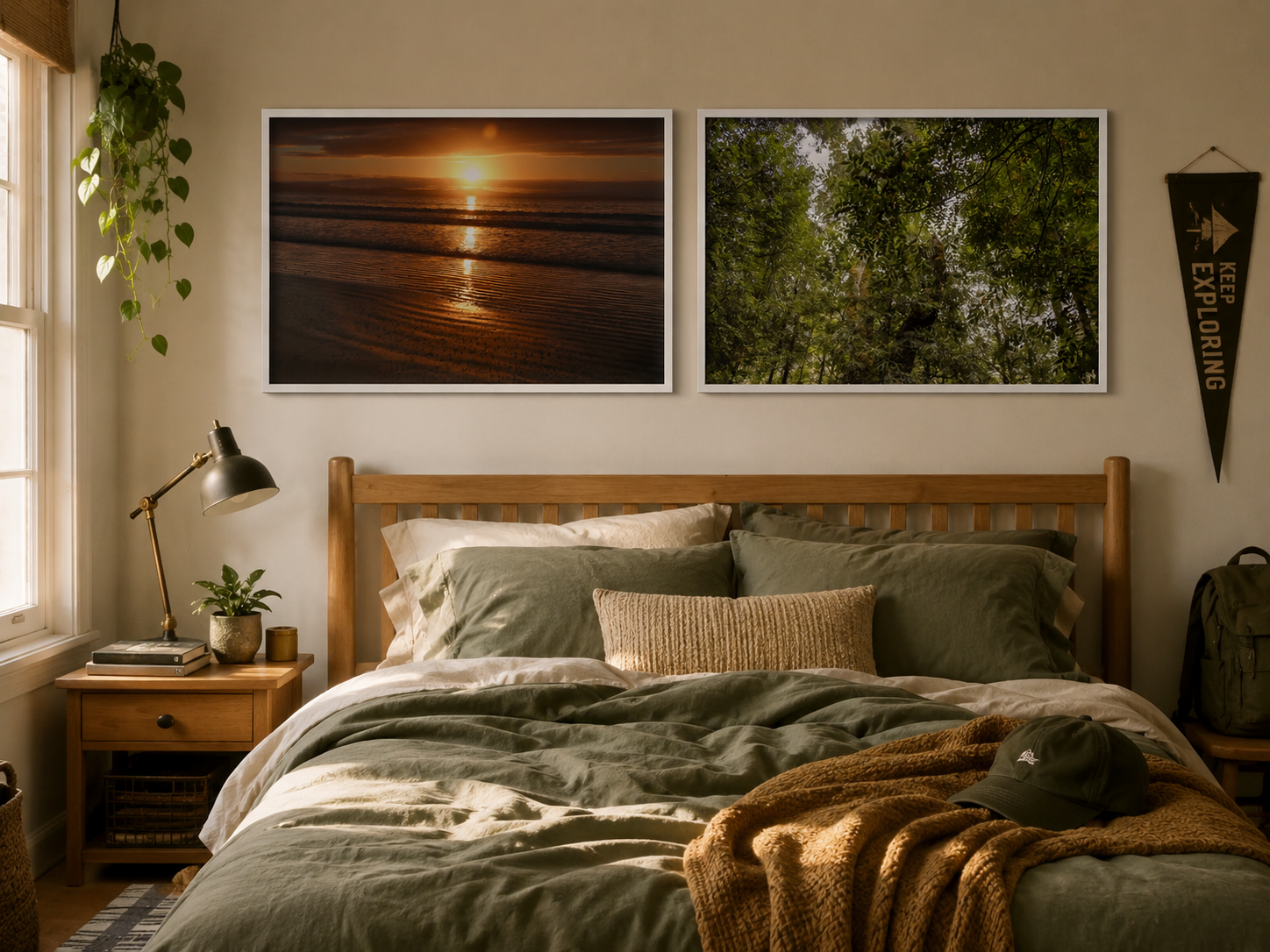
(Featured image: A Seven Mile Beach and Tasmanian foliage print above a trendy oak bedframe, with green foliage, stone textures, and soft window light. Photo by VanVakarnee.)
Tasmanian wall art works best when it does more than fill a blank space.
It should bring something of the island into the room: filtered forest light, wet rock, fern detail, weathered timber, mountain air, or the feeling of a track disappearing into the trees. The strongest pieces do not need to shout. They hold attention because they feel connected to a real place.
That is why Tasmanian photography prints are such a natural fit for Australian homes. They suit living rooms, bedrooms, hallways, home offices, holiday rentals, and quiet corners that need more texture without feeling over-styled.
This guide walks through how to choose Tasmanian wall art by room, subject, size, and finish, with practical examples from the VanVakarnee photography collection.
For this article we will be using VanVakarnee prints as an example as they fit the “Tasmanian” theme really well, but you can use any print you want.
Tasmania has a visual language of its own.
The island is known for dense forest, alpine country, waterfalls, old timber, rugged rock, changing weather, and detailed natural environments. The Tasmanian Wilderness World Heritage Area, managed by Tasmania Parks and Wildlife Service, covers around one-fifth of the state and protects a vast range of natural and cultural heritage. That gives Tasmanian landscape photography a depth that feels different from more generic scenery.
The best Tasmanian wall art often comes from smaller details rather than postcard views.
A fern growing from an old stump. Water falling over dark rock. A narrow bridge leading through thick bushland. Light catching a wet branch. These images suit Australian interiors because they feel grounded. They bring nature inside without making the room feel themed.
For a strong starting point, browse the VanVakarnee photographs collection, which includes nature and landscape prints captured across Tasmania and Australia.
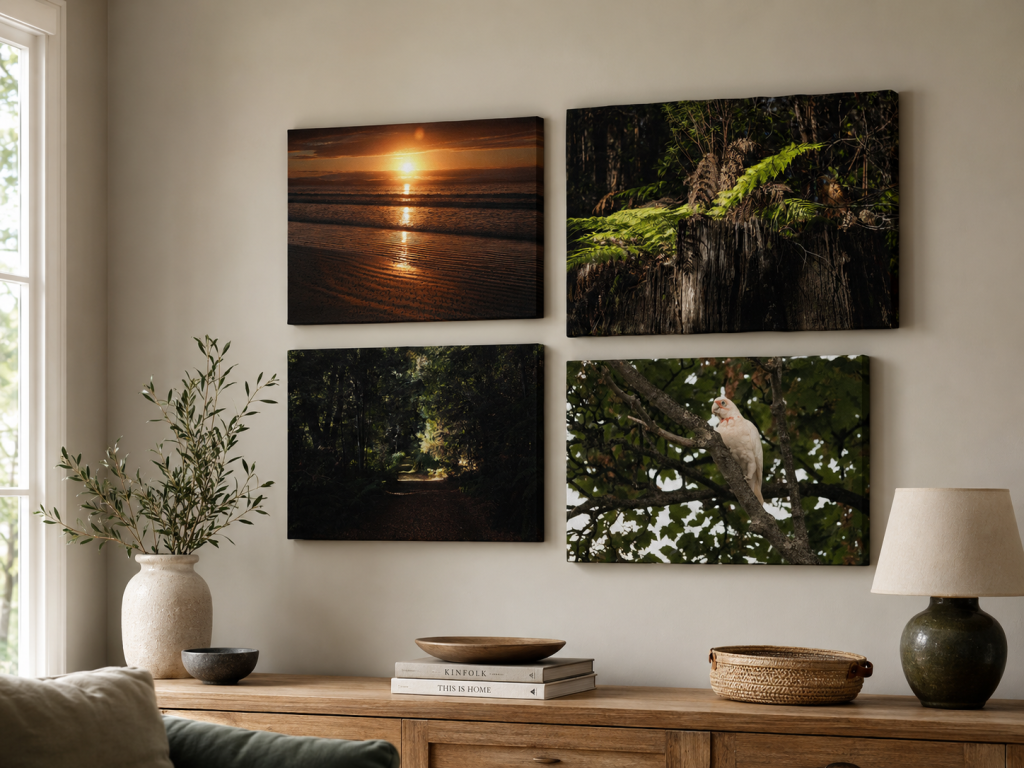
(Image: A group of Tasmanian forest photography prints arranged on a light wall, featuring waterfall, fern, and walking-track scenes. Photo by VanVakarnee.)
A print might look beautiful on its own, but the real test is whether it suits the room.
A living room usually needs a piece with presence. A bedroom often works better with softer contrast and less visual movement. A hallway can handle a narrow vertical print. A home office benefits from depth, structure, or a scene that gives the eye somewhere to rest between tasks.
Before choosing a print, look at the space and ask what the wall needs to do.
Does it need to anchor the room?
Does it need to soften hard furniture?
Does it need to make a rental listing photo feel more finished?
Does it need to add natural colour to a plain wall?
For larger shared spaces, start with the Living Room wall art collection. For short-stay properties, the Airbnb wall art collection is a useful place to begin because holiday rentals need prints that photograph well and appeal to a wide range of guests.
The living room is where Tasmanian wall art can carry the most weight.
If the print is going above a sofa, sideboard, or fireplace, choose something with enough scale to feel connected to the furniture below it. A small print above a large couch can look lost, even if the image itself is strong.
Waterfall and forest prints work especially well here because they create depth. A piece like “Bottles” gives the room movement through the falling water, while still keeping the palette tied to greens, greys, and dark natural textures. It is a good option for a feature wall where the print needs to hold attention without overpowering the furniture.
For a slower, more detailed waterfall piece, “Corkscrew” has a more enclosed composition, with water winding over moss-covered stone. It suits rooms where you want texture, shadow, and natural detail rather than a bright scenic view.
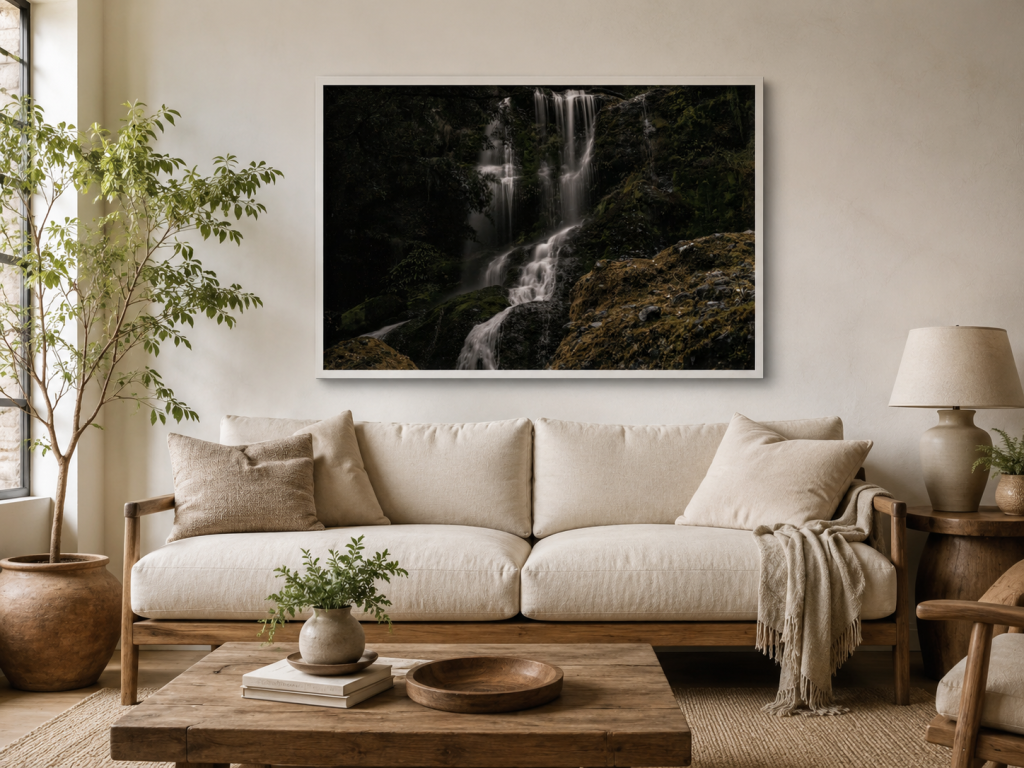
(Image: “Bottles” waterfall wall art styled above a sofa with timber furniture, linen cushions, and indoor plants. Photo by VanVakarnee.)
Bedroom wall art should give the room a finished feeling without making the eye work too hard.
This is where forest details, filtered light, and softer natural forms usually perform better than very busy images. Look for prints with gentle movement, layered foliage, or darker backgrounds that give the wall depth.
Ashlight is a strong bedroom choice because it focuses on narrow shafts of light through Australian bushland. The composition has depth, but it does not rely on sharp colour or heavy contrast. It works well above a bed, beside a reading chair, or across from a window where the natural light in the room can echo the light in the print.
For bedrooms with timber, stone, cream, olive, charcoal, or warm white finishes, Tasmanian forest photography is especially easy to style. It gives the room texture without needing patterned wallpaper, strong paint colour, or extra décor.
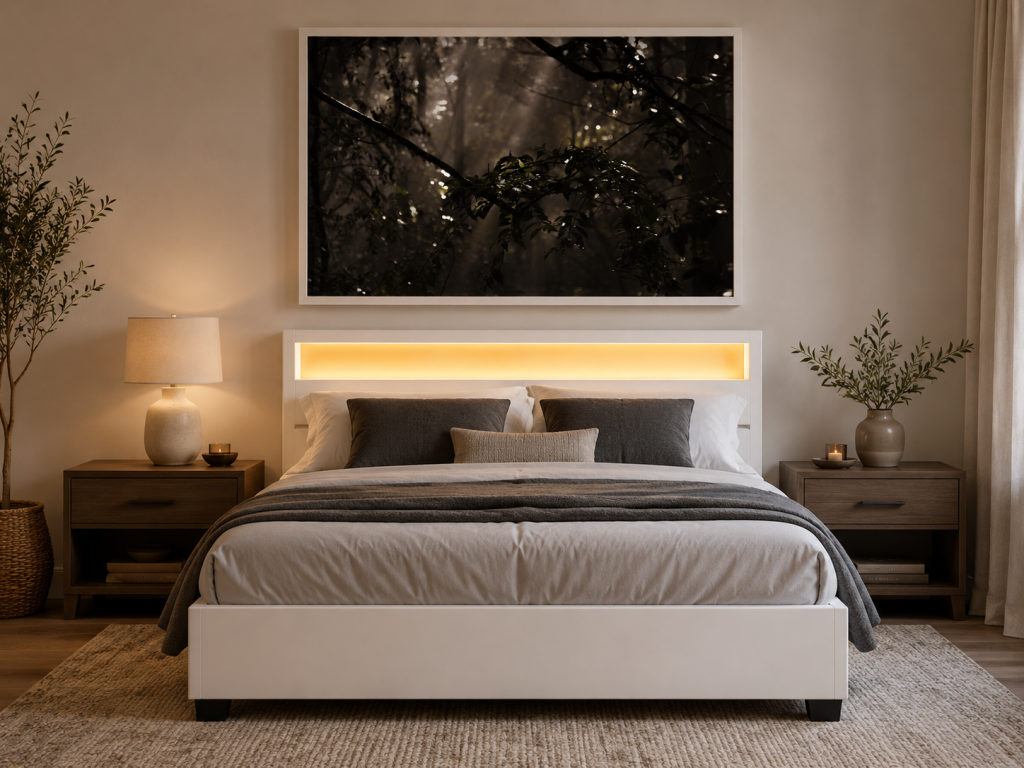
(Image: “Ashlight” wall art above a bed with white bedding, timber bedside tables, and soft green accents. Photo by VanVakarnee.)
Hallways are often narrow, but they are one of the best places to use photography.
A hallway does not always need a large hero piece. It often works better with a vertical print, a pair of related images, or a single track-style composition that leads the eye forward.
“Span” is a natural fit for this type of space. The image features a narrow wooden footbridge cutting through dense bushland, which makes it feel directional. In an entryway or hallway, that kind of composition helps the wall feel connected to movement through the home.
This is especially useful in homes where the entrance opens into a plain corridor. A print with a path, bridge, or track can make the first impression feel more considered.
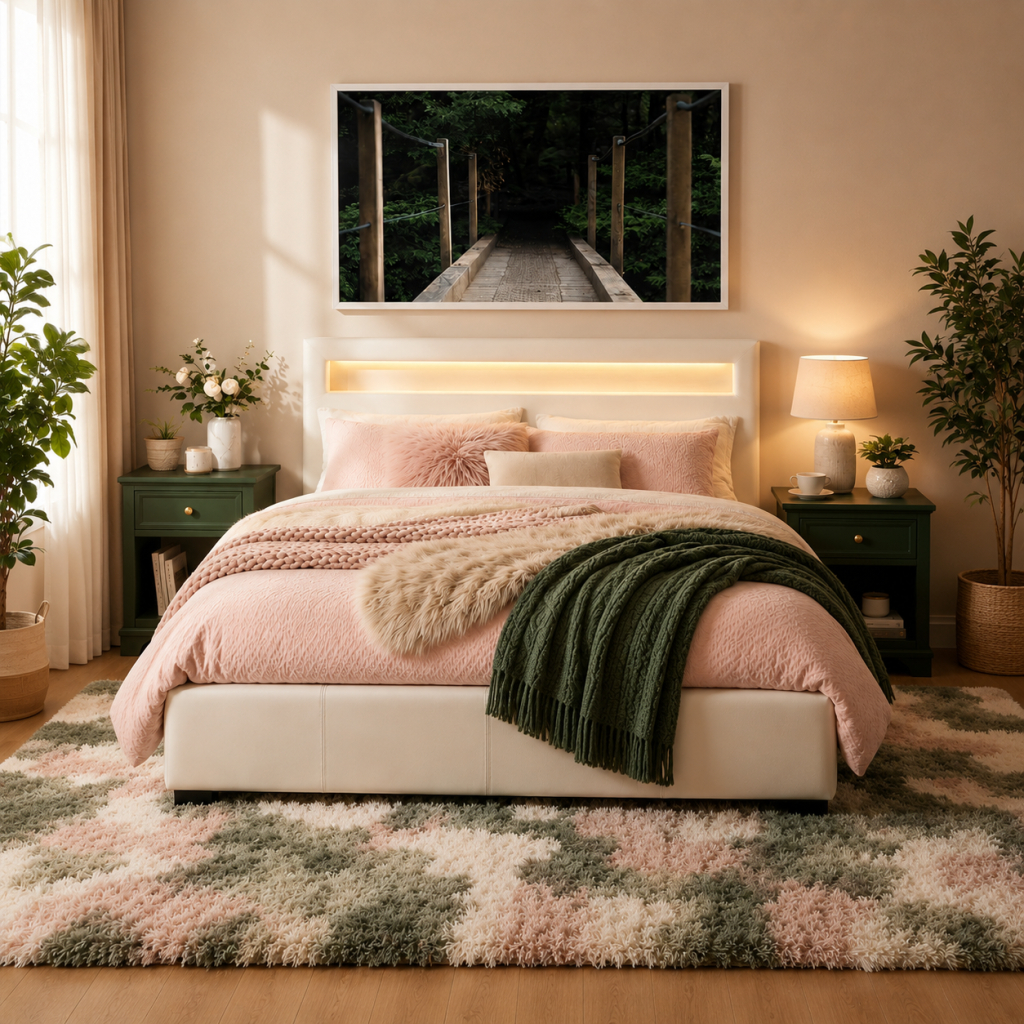
(Image: A Tasmanian walking-track print hung in a narrow hallway, with a timber console table and woven basket below. Photo by VanVakarnee.)
Holiday homes need wall art that does three things at once.
It should make the room feel finished.
It should photograph well in listing images.
It should help guests understand the feeling of the property.
Tasmanian wall art is particularly useful for this because it gives a property local character without becoming too personal. A guest does not need to know the exact location to understand the feeling of wet forest, old timber, fern growth, or a track through the bush.
For an Airbnb living room, choose one large statement print rather than several small unrelated pieces. For bedrooms, use softer forest or waterfall prints. For entryways, use a print with a path, bridge, doorway, or natural frame.
A piece like “Crown Stump” works well in holiday homes because it is detailed and natural, but not overly location-specific. It shows fern growth and weathered timber, which adds texture to a room and photographs well in close-up listing shots.
For broader travel context, Tourism Tasmania’s official site has a useful overview of Tasmania’s national parks and the variety of protected landscapes across the island.
Size changes everything.
A beautiful print can look weak if it is too small for the wall. It can also feel too heavy if it is oversized for a narrow room. The safest approach is to match the print to the furniture or wall section it sits with.
Above a sofa or bed, the artwork should usually feel visually connected to the furniture below it. As a guide, a print or print set often works best when it spans around two-thirds of the furniture width. For a hallway, smaller vertical pieces can work well because the viewer is closer to the wall. For a large blank living room wall, one larger piece will usually feel more intentional than several tiny prints.
VanVakarnee prints are available in a wide range of sizes, including A4, A3, A2, A1, 8×10, 12×16, 16×24, 24×36, 30×40, and 36×48 options, with print and canvas choices available on product pages such as “Bottles” and “Corkscrew”.
The right finish depends on the room and how you want the artwork to sit in the space.
Canvas gives the piece a more substantial presence on the wall. It works well for larger rooms, holiday homes, living areas, and places where you want the artwork to feel like a finished feature. It also avoids glass glare, which can be helpful in bright rooms or listing photography.
Paper prints give you more flexibility with framing. They are a good choice if you want to match existing frames, create a gallery wall, or style the print with a mat board. Paper also works well for smaller sizes, desks, shelves, and hallway pieces.
For Tasmanian photography, both options can work. Waterfall and forest prints often look strong on canvas because the texture suits the subject. Smaller botanical and detail-focused images can look refined as paper prints in simple frames.
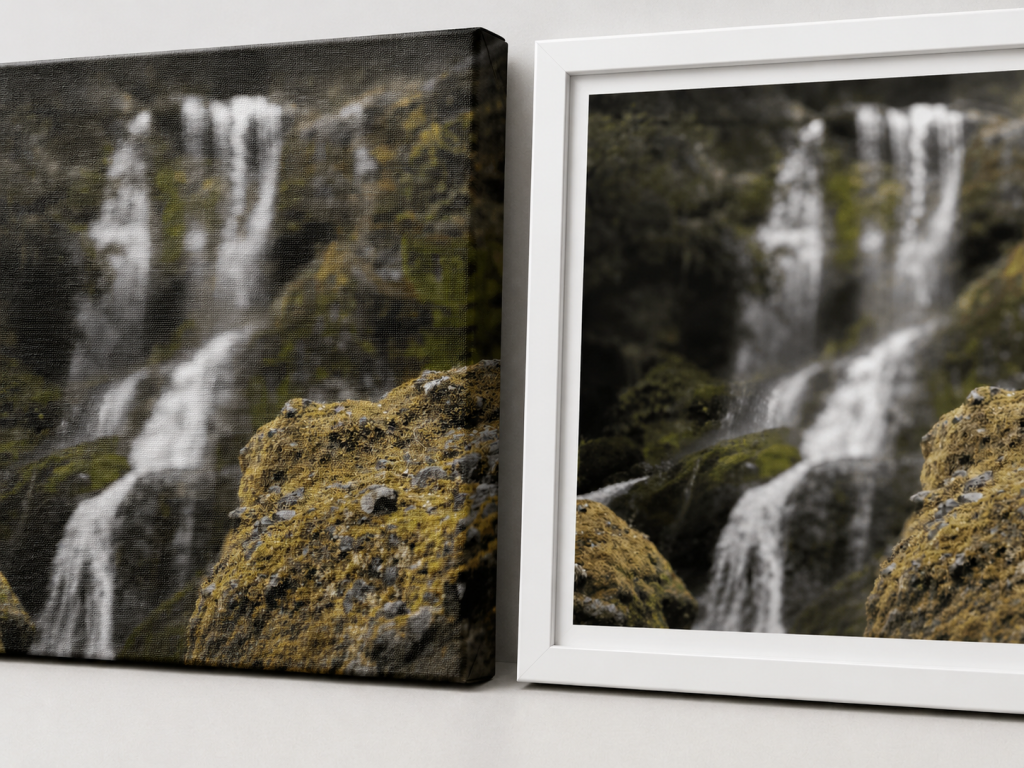
(Image: A Tasmanian waterfall print shown as canvas beside a framed paper print, with close-up detail of texture and colour. Photo by VanVakarnee.)
Different Tasmanian subjects do different jobs.
Waterfall prints add movement.
Forest prints add depth.
Fern and botanical details add texture.
Track and bridge images add direction.
Rock and mountain scenes add weight and structure.
For a living room, waterfall or wide landscape photography usually works best. For a bedroom, filtered forest light or softer foliage is easier to live with. For a hallway, a track or bridge composition makes the space feel longer and more purposeful. For a study, darker forest images can give the room more focus.
That is why a print like “Span” suits an entry or hallway, while “Ashlight” suits bedrooms and reading spaces. “Bottles” and “Corkscrew” are better suited to larger walls where the waterfall detail has room to breathe.
Buying from a Tasmania-based business changes the connection between the print and the place.
VanVakarnee is a family-run creative business from Tasmania, with original photography captured across Australia and a strong connection to Tasmanian landscapes. The business is built around the full creative loop: capturing, creating, and displaying artwork. You can read more about that on the About VanVakarnee page.
That matters because Tasmanian wall art is not just about using the word “Tasmania” in a product title. It is about noticing the details that make the place feel real: the way light falls through trees, how water moves across rock, how ferns reclaim old timber, and how weather changes the mood of a track.
The best prints come from time spent looking.
Tasmanian wall art usually refers to prints, photography, paintings, or illustrations inspired by Tasmania’s landscapes, wildlife, towns, forests, waterfalls, mountains, and natural details. For VanVakarnee, it often means photography prints connected to Tasmania’s bushland, water, texture, and changing light.
Tasmanian photography prints work well in living rooms, bedrooms, hallways, home offices, dining rooms, and holiday rentals. Larger waterfall or landscape prints suit living rooms, while forest details and softer light work well in bedrooms and reading spaces.
Yes. Tasmanian wall art can help a holiday rental feel more finished and connected to place. It adds local character without relying on personal photos or overly specific decoration. For short-stay styling, start with the VanVakarnee Airbnb wall art collection.
Choose canvas if you want a stronger feature piece with no glass glare. Choose paper if you want to frame the print yourself or create a smaller styled arrangement. Both options can work well for Tasmanian landscape and nature photography.
You can browse Tasmanian and Australian photography prints through the VanVakarnee photographs collection, including pieces such as “Bottles”, “Corkscrew”, “Ashlight”, “Crown Stump”, and “Span”.
Tasmanian wall art is at its strongest when it feels connected to real landscape, not just decoration.
The right print can make a living room feel more grounded, a bedroom feel more finished, a hallway feel less empty, or a holiday rental feel more memorable in photos. Start with the room, then choose the subject, size, and finish that suit the space.
Waterfalls bring movement. Forests bring depth. Ferns and timber bring texture. Tracks and bridges bring direction.
Ready to choose a piece for your home or holiday property? Browse the VanVakarnee photography prints, explore living room wall art, or start with a Tasmania-inspired piece like “Bottles”, “Corkscrew”, or “Span”.