Wall Art for a Grey Sofa: Australian Colour & Size Guide
Wall art for a grey sofa should add warmth or contrast. Use this Australian colour and size guide to choose the right canvas, framed…
By Anne N.
August 21, 2026 | 5:00 PM AEST
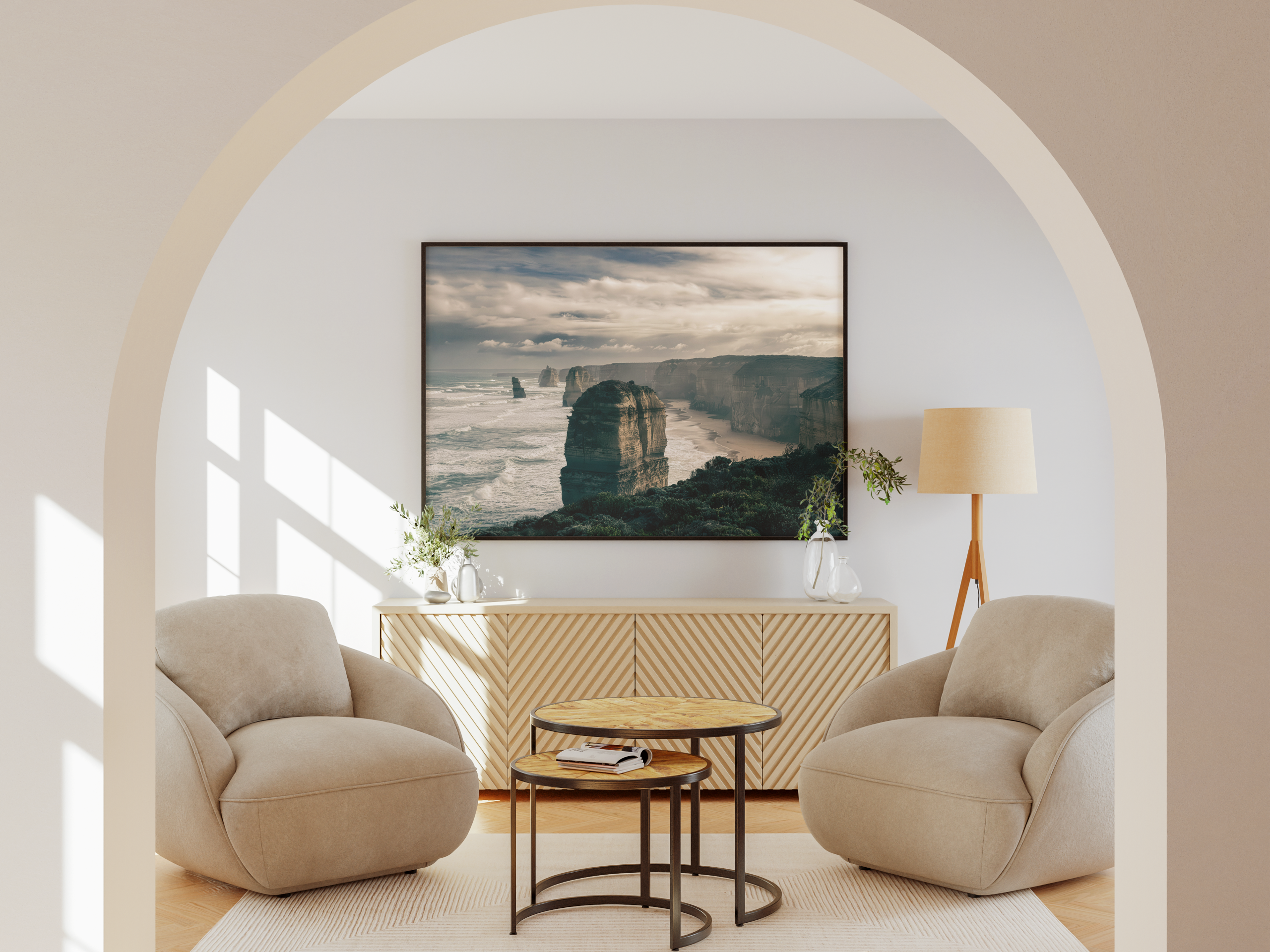
(Ocean Monoliths coastal wall art showing how a substantial framed photograph can anchor a contemporary room. Photo by VanVakarnee.)
Quick answer: in the choice between canvas vs framed prints, choose canvas for a lighter, non-reflective statement piece and choose a framed paper print for a more tailored finish with control over the frame and mat. Neither is automatically better—the right option depends on room light, artwork size, interior style and how much visual structure the wall needs.
Online product previews can make both formats look almost identical. In a real Australian home, the difference becomes clearer: glazing can reflect a bright window, a timber frame can connect with furniture, and a deep canvas can feel substantial without adding a heavy outer border.
This canvas vs framed prints guide compares appearance, glare, weight, size, maintenance and value so you can choose the wall art format that suits your room before ordering.
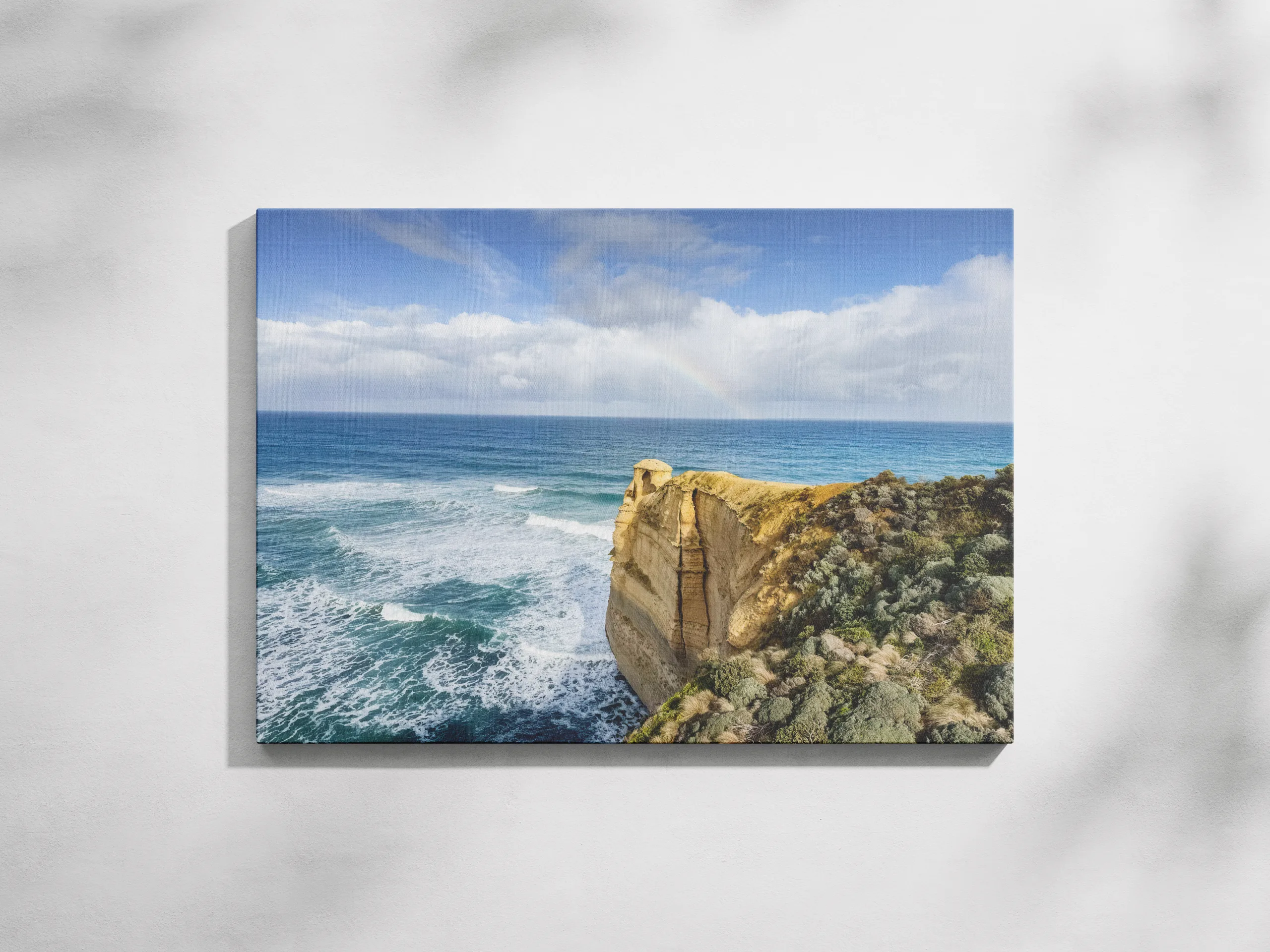
For a clear canvas vs framed prints comparison, a canvas print is produced on canvas material and stretched around a supporting frame. A framed paper print is printed on art paper and presented inside an external frame, often with a mat and glazing.
| Feature | Canvas wall art | Framed paper print |
|---|---|---|
| Look | Clean, dimensional and gallery-like | Structured, polished and customisable |
| Reflection | Usually low glare | Depends on glazing and room light |
| Border | Image or edge treatment wraps the stretcher | Frame and optional mat create a defined border |
| Weight | Often lighter at large sizes | Can become heavier as frame and glazing grow |
| Style | Contemporary, relaxed, statement scale | Classic, Scandinavian, coastal or architectural |
| Grouping | Strong as one large feature piece | Easy to coordinate as pairs and gallery walls |
Compare the finished outside dimensions, not only the printed image. Standard A-series paper dimensions are defined by ISO 216, but a mat and frame can make a paper print considerably larger than its listed paper size.
When comparing canvas vs framed prints in Australian living rooms with bright windows, canvas can be particularly useful. Its surface usually produces less obvious reflection than conventional glazing, allowing darker coastal, forest and city details to remain visible during the day.
In the canvas vs framed prints decision, a frame provides a strong visual boundary. Black can sharpen pale coastal images, natural timber can warm blue or grey scenes, and white can keep botanical or minimal photography feeling light. A generous mat also helps a smaller image occupy more wall space without appearing cramped.
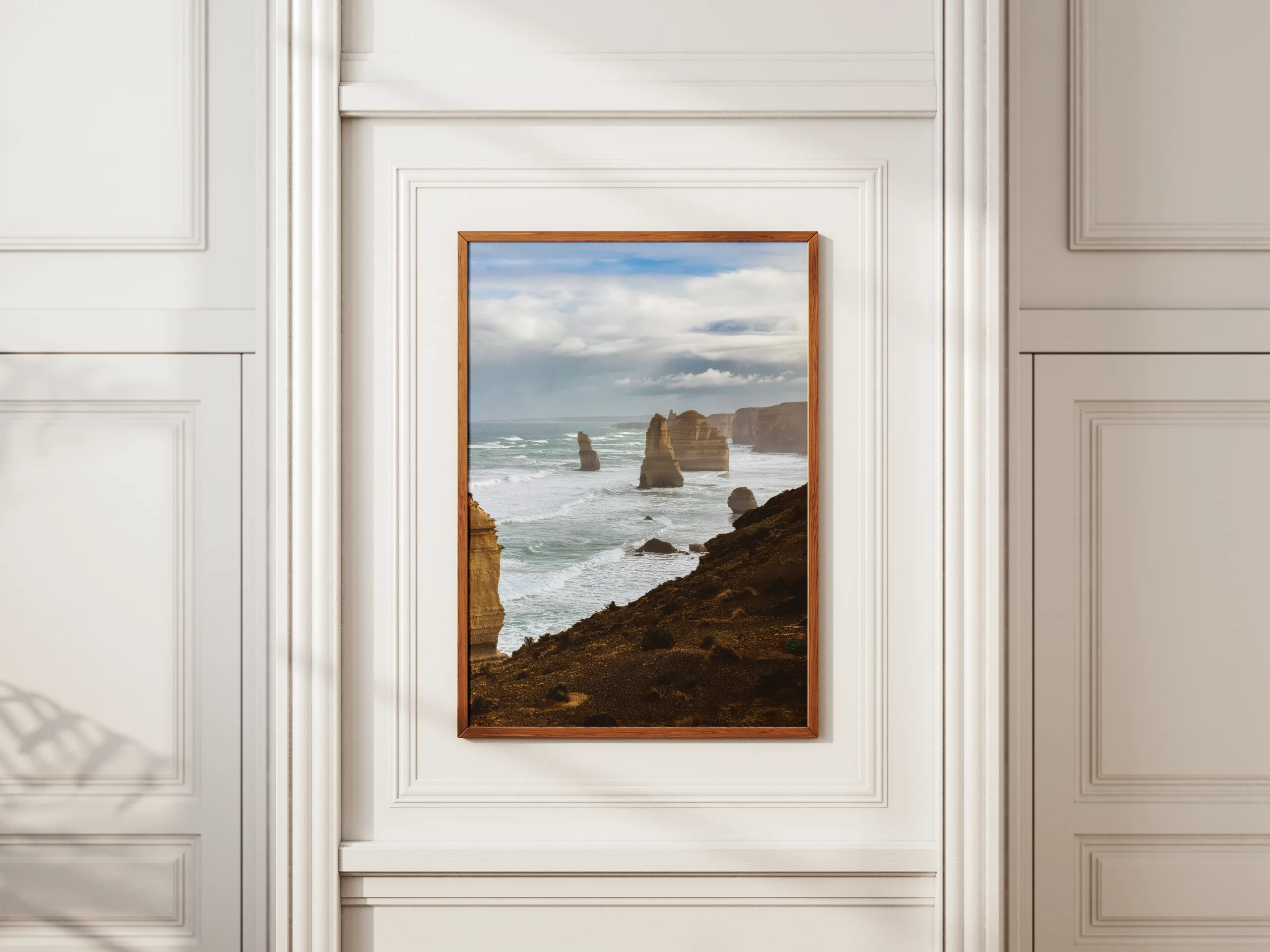
Canvas is often the simpler choice when strong windows face the artwork. Framed prints can still work, but place them on a wall that does not directly reflect the brightest window or choose suitable glazing where available.
Before ordering, stand where the artwork will normally be viewed and watch the wall from morning to late afternoon. A room in Hobart may receive low winter sun from a different angle than summer light; north- and west-facing windows can create especially strong reflections later in the day.
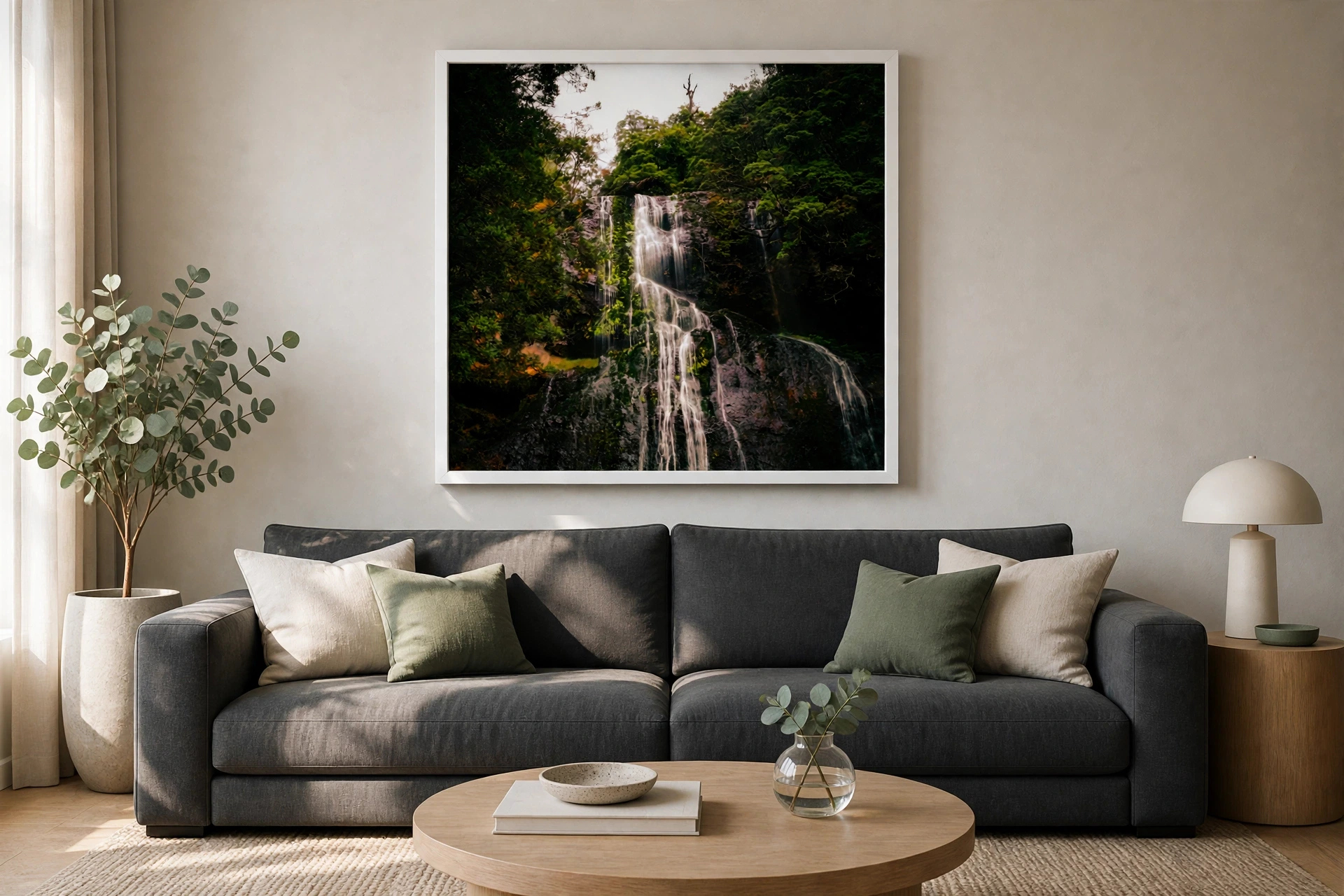
Large canvas wall art creates impact without adding a wide outer border. A large framed print feels more architectural and can connect strongly with furniture, but its finished dimensions and weight increase once the mat, frame and glazing are included.
For artwork above a sofa, aim for a finished width approximately 60–75% of the sofa width. A 200-centimetre sofa therefore suits a complete artwork arrangement around 120–150 centimetres wide.
| Furniture width | Suggested art width | Format to consider |
|---|---|---|
| 140 cm | 84–105 cm | One framed landscape or medium canvas |
| 180 cm | 108–135 cm | Large canvas or framed pair |
| 200 cm | 120–150 cm | Statement canvas, large frame or trio |
| 220 cm | 132–165 cm | Wide canvas or coordinated framed set |
| 240 cm | 144–180 cm | Oversized canvas or three-print arrangement |
Use the Australian wall art sizing guide for a complete sofa calculator and hanging-height instructions.
Choose a large canvas for uninterrupted image impact, or a slim black frame when the room needs a precise architectural line.
Canvas suits the easy, textural quality of coastal rooms. Natural timber frames also work when they connect with flooring, tables or woven materials.
Pale timber and generous white mats keep framed photography light. A simple canvas can work when the image contains soft colour and plenty of open space.
A framed print usually integrates more easily with decorative furniture, mouldings and collected objects. Choose the frame as carefully as the image.
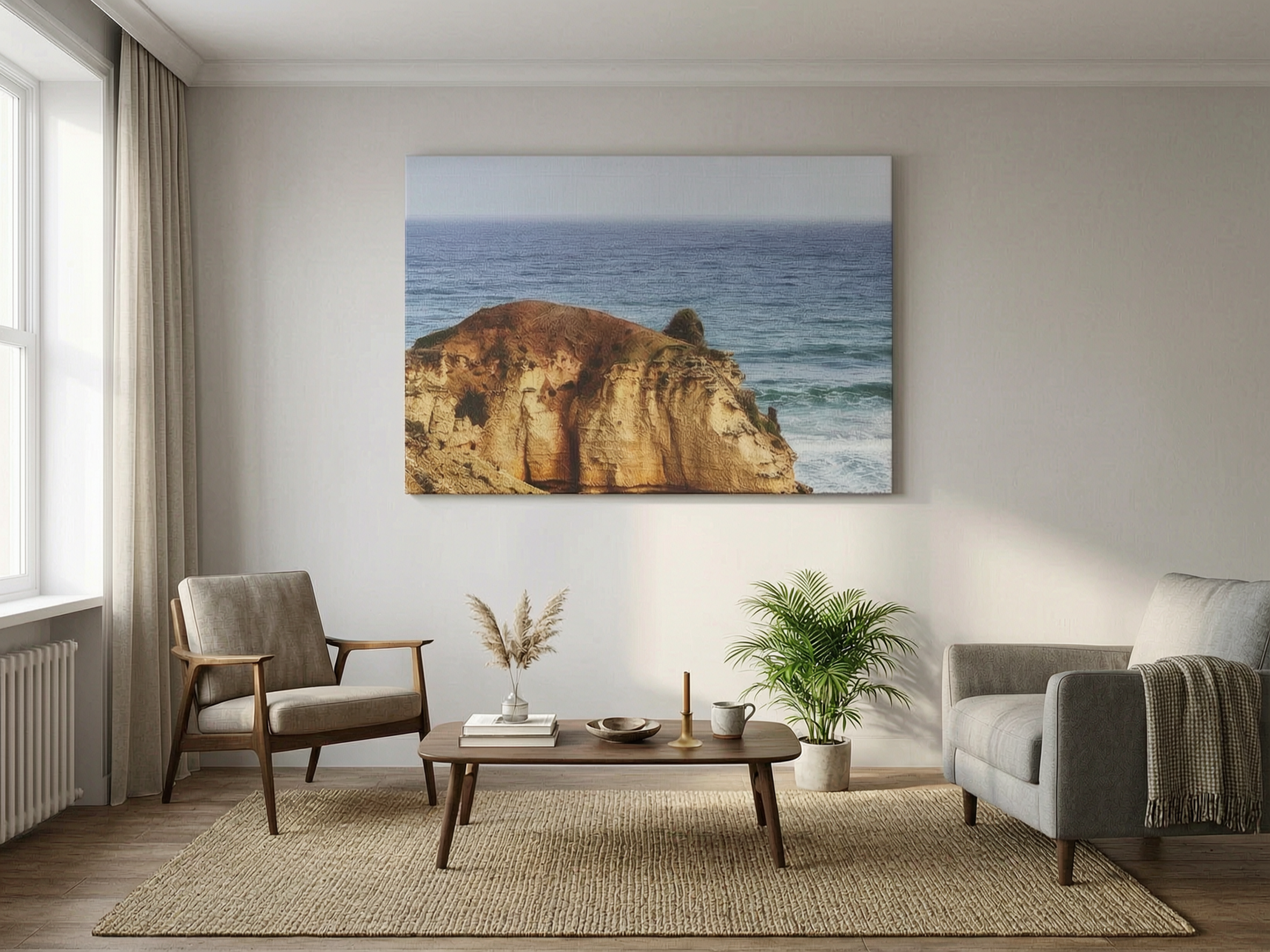
Compare like with like: print size, finished size, materials and whether framing is included. A paper print can be economical when you already own a suitable frame. A ready-to-hang canvas can reduce the extra decisions required after delivery.
Framed paper offers more presentation flexibility because the frame and mat can potentially be changed. Canvas delivers a finished object with fewer components. Neither advantage matters if the artwork is undersized, so calculate the wall area before comparing price alone.
Shortlist the image first, then compare the available canvas and print dimensions against your measured wall.
Canvas is better for low glare and a lighter large-scale presentation. A framed print is better when you want a defined border, mat or frame that coordinates with the room.
A well-produced canvas in the correct size can look substantial and refined. Check the product details, edge treatment, canvas depth and image quality rather than judging the format alone.
They can be, depending on the glazing and window position. Check reflections at different times of day before choosing the wall.
Longevity depends on materials, production, handling and exposure to sunlight, moisture and heat. Follow the care guidance supplied with the product.
Yes, but use consistent spacing and a connecting palette so the mixed formats read as one deliberate arrangement.
Framed prints are usually easier because matching frame profiles create order across different images and sizes.
The canvas vs framed prints decision becomes simpler once you know the wall, light and desired scale. Choose canvas for low glare and clean statement impact. Choose a framed paper print for structure, presentation flexibility and coordinated sets.