When black and white prints work better than colour
Your living room already has its colours: the rug, the cushions, the timber floor. A black and white print gives the wall presence without…
By Angus W.
April 29, 2026 | 4:00 PM AEST
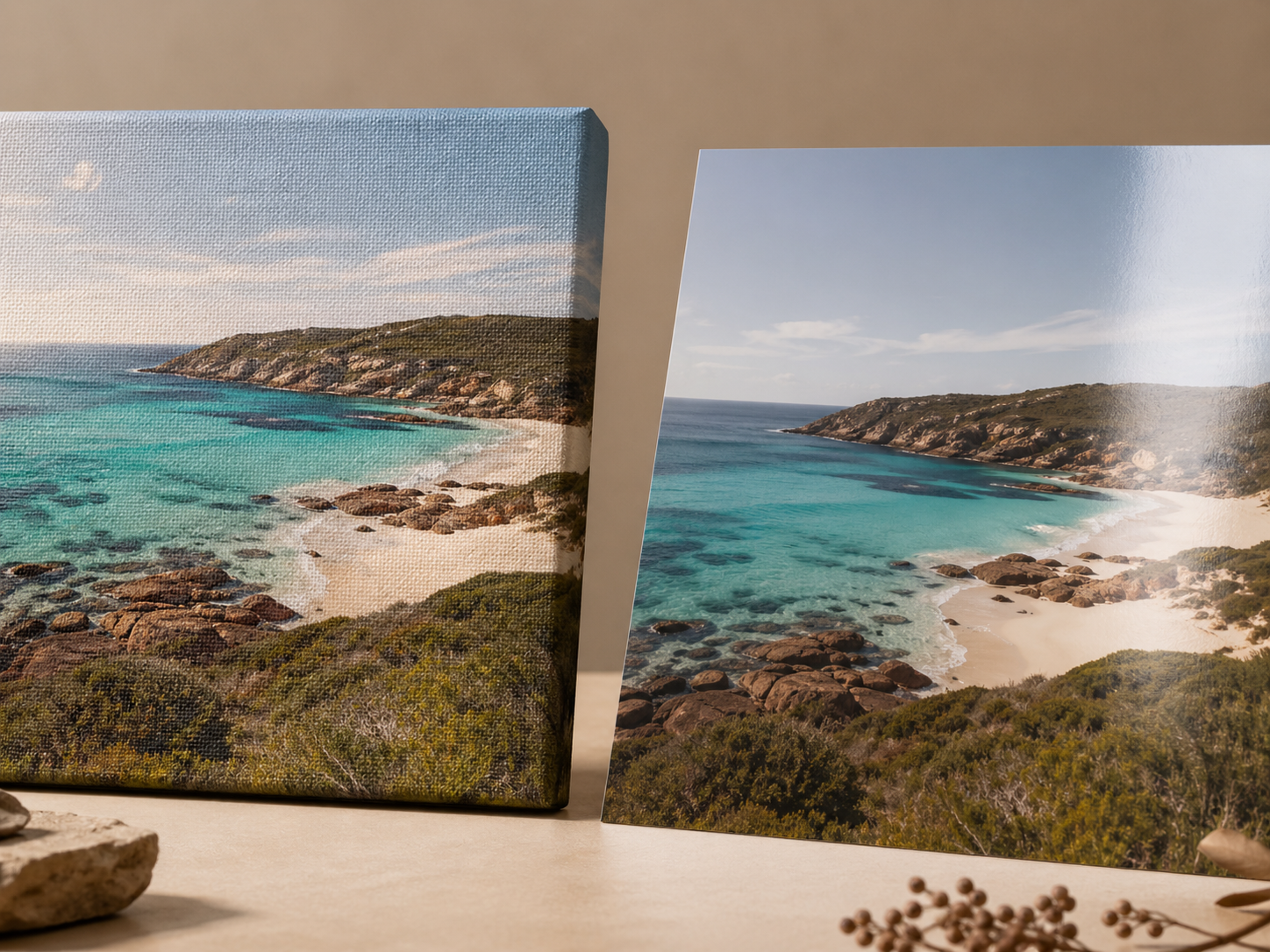
(Featured image: A canvas wall art print and a gloss paper print of a coastal green beach scene, displayed side by side with soft sunlight hitting the pieces. Photo by VanVakarnee)
Choosing the image is usually the fun part. You find a landscape, botanical piece, abstract print, or photographic artwork that feels right for the room. Then comes the question that slows everything down: should you order it on canvas or gloss paper?
It sounds like a small decision, but the print finish changes how the artwork feels in your home. Canvas has texture, depth, and a relaxed gallery presence. Gloss paper is crisp, sharp, and flexible, especially if you want to frame the piece yourself.
At VanVakarnee, prints are available on canvas or gloss paper, which gives you room to choose the finish that suits your wall, your light, and the mood you want to create. This guide walks through the difference between the two so you can choose with confidence.
If you want a simple rule, choose canvas when you want the artwork to feel like a finished statement piece, and choose gloss paper when you want fine detail, clean photographic sharpness, or the freedom to frame it your own way.
Canvas suits larger wall art, natural interiors, soft rooms, and relaxed spaces where texture matters. Gloss paper suits photography, gallery walls, smaller prints, modern framing, and rooms where you want the image to feel crisp and polished.
Neither option is automatically better. The better choice is the one that suits the room.
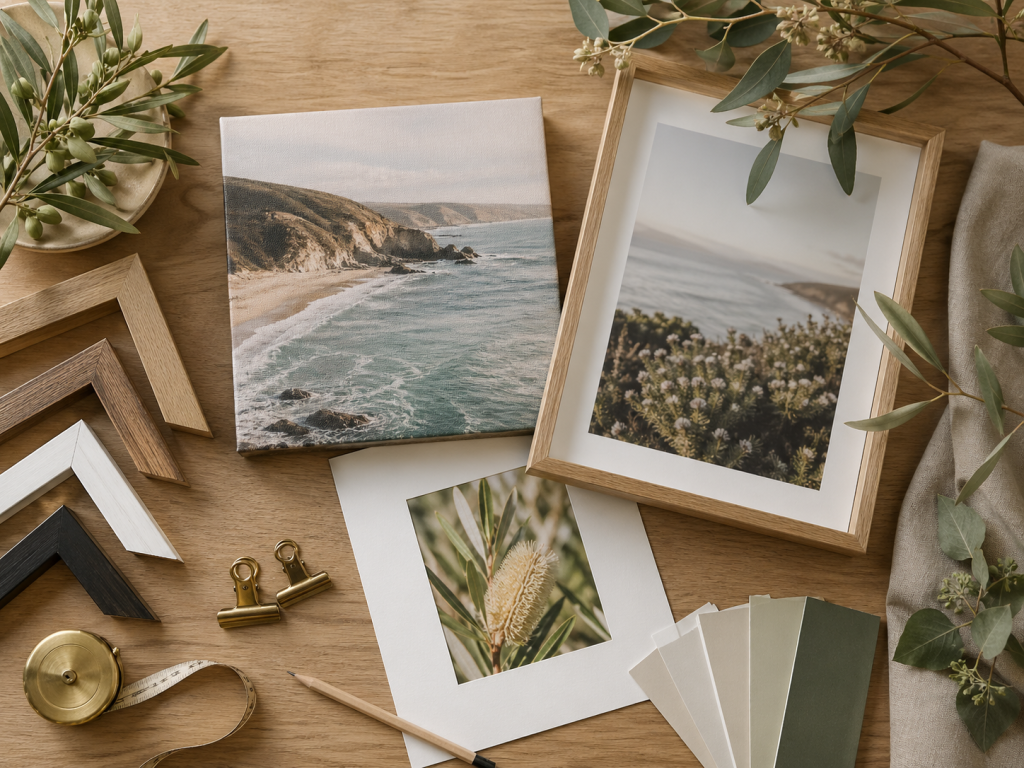
(Image: Flat lay of coastal photo prints, frame samples, and tools on a wooden surface, including a canvas wall print and a gloss paper wall print with botanical styling. Photo by VanVakarnee)
Canvas is the finish most people think of when they imagine a large statement piece. It has a soft woven texture that gives the artwork more physical presence on the wall. Instead of looking like a flat poster, a canvas print feels more like an object in the room.
This makes canvas a strong choice for living rooms, bedrooms, entryways, home offices, and larger open-plan spaces where the artwork needs to hold its own.
Canvas works especially well for:
The slight texture of canvas can soften an image. This is useful when you want the artwork to feel calm, organic, or less glossy. A misty forest, a coastal scene, a botanical print, or an abstract composition often looks more settled on canvas because the finish naturally reduces harsh reflections.
Canvas is ideal in spaces where you want a piece to feel substantial without needing a heavy frame. In a living room, a large canvas above a sofa can create a clear focal point. In a bedroom, canvas can feel softer and less formal than framed glass. In a hallway, canvas can also be useful because it avoids the glare that sometimes comes from glass or shiny surfaces.
Design Note: If your room already has a lot of hard materials such as tiles, glass, stone, metal, or glossy cabinetry, canvas can help soften the space.
Gloss paper is the better choice when detail matters. It keeps the image feeling clean, sharp, and photographic. Colours often feel brighter, dark areas can look deeper, and fine details are easier to see.
This makes gloss paper especially useful for photographic prints, gallery walls, smaller artworks, and pieces you plan to frame.
Gloss paper works especially well for:
The biggest advantage of gloss paper is flexibility. Because VanVakarnee prints are sold unframed, gloss paper gives you the freedom to choose a frame that suits your home. You can use natural oak for warmth, black for contrast, white for a clean gallery look, or gold for a more decorative interior.
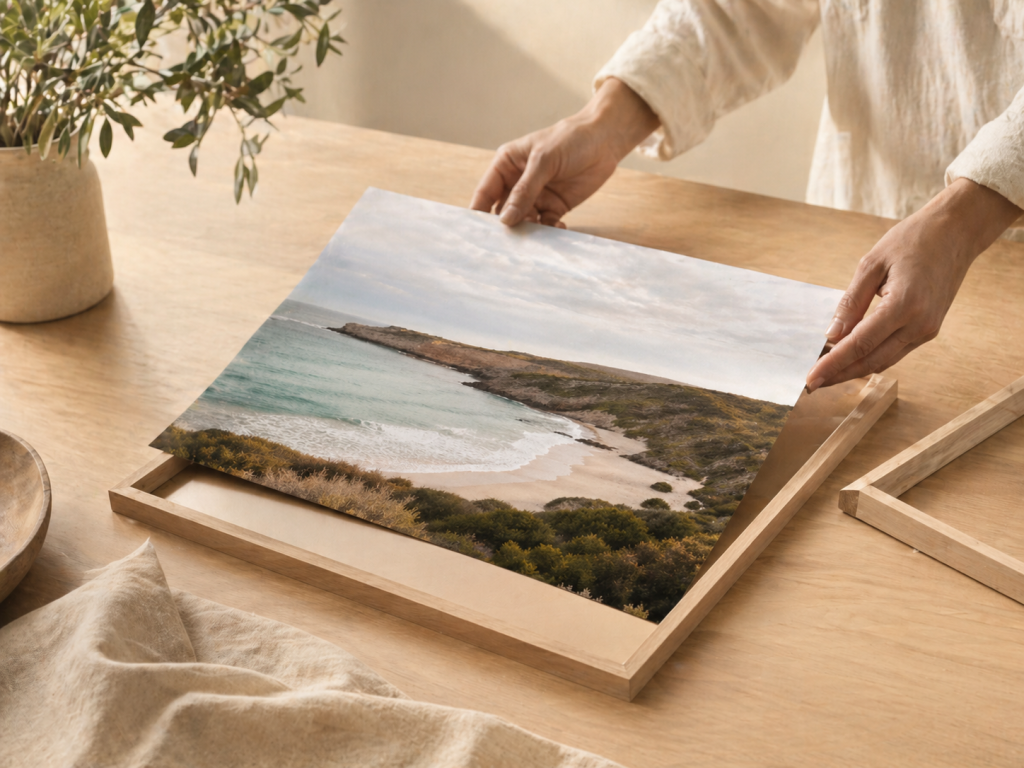
(Image: Hands placing a coastal landscape print into a wooden frame, showing a soft-toned canvas wall print on a light timber table. Photo by VanVakarnee)
Before choosing between canvas and gloss paper, look at the light in the room.
Light affects how a print behaves. A finish that looks beautiful in a soft bedroom may feel too reflective in a bright hallway or sunlit living room.
If your room gets strong natural light, canvas is often the safer choice. The textured surface helps reduce the feeling of glare, making the artwork easier to view from different angles.
Gloss paper can still work beautifully in bright rooms, but you need to think about where the print will hang. If the artwork sits directly opposite a large window, reflections may become more noticeable, especially once framed behind glass.
In darker rooms, gloss paper can help the image feel more vivid. The finish can give colours and contrast more life, which is useful in hallways, offices, or rooms with limited natural light.
Canvas can also work in dark rooms, but choose an image with enough contrast. Very dark artwork on canvas in a dim room may feel heavy unless it is balanced with good lighting.
Downlights can create strong reflections on shiny surfaces. If your artwork will sit directly under ceiling lights, canvas is usually more forgiving. For gloss paper, consider using a frame position or glass type that reduces reflection.
Landscape photography depends on mood. That is why both canvas and gloss paper can work, but they create different feelings.
Canvas makes a landscape feel softer and more atmospheric. It is a strong option for Australian nature prints, Tasmanian scenes, coastal images, quiet bushland, and earthy colour palettes. The texture adds a handmade feeling and helps the image sit naturally in the room.
Gloss paper makes a landscape feel clearer and more photographic. It is ideal when the image contains fine detail, strong contrast, dramatic skies, sharp trees, water reflections, or architectural elements.
If you are choosing a VanVakarnee nature or landscape print, think about what first attracted you to the image.
If it was the mood, choose canvas.
If it was the detail, choose gloss paper.
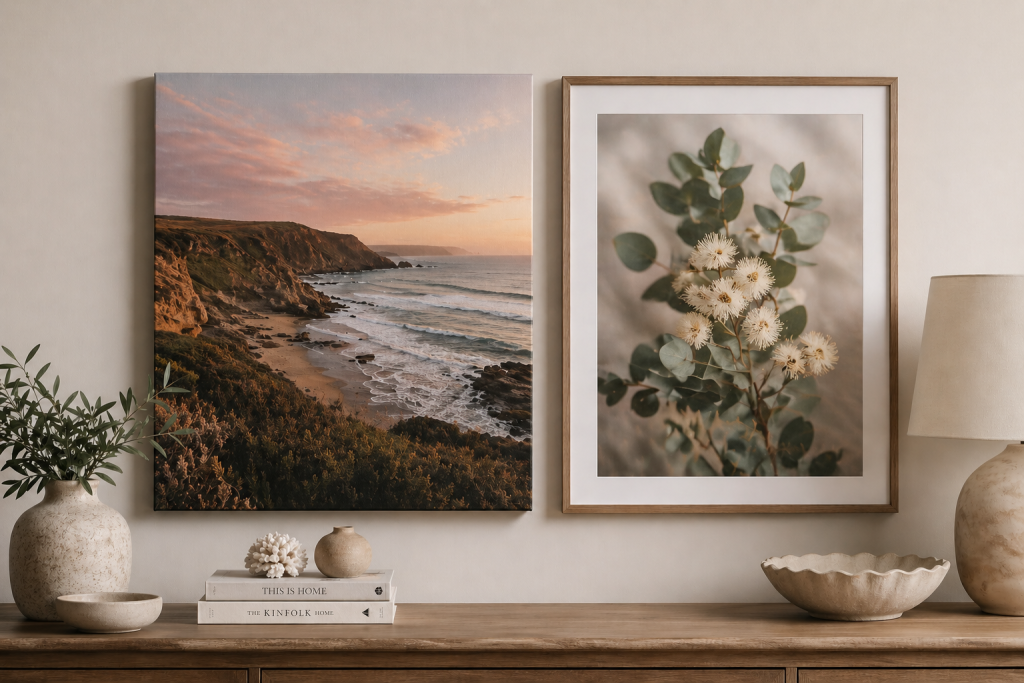
(Image: Australian landscape wall art displayed as both a canvas print and a framed gloss paper print. Photo by VanVakarnee)
Size changes the best finish.
For larger pieces, canvas often feels more natural because it has enough texture and body to fill a wall. A large canvas print above a sofa, bed, console table, or dining setting can look complete without much else around it.
For smaller pieces, gloss paper is often more flexible. Smaller prints usually look best framed, especially if they are part of a gallery wall or styled on a shelf, desk, or sideboard.
This is not a strict rule. A large framed gloss paper print can look beautiful in a formal living room, and a smaller canvas can work well in a bedroom nook. But as a starting point, the larger you go, the more canvas starts to make sense.
Different rooms ask different things from artwork. A print in a hallway is viewed quickly as people walk past. A print in a bedroom is usually seen in softer light. A print in a living room often becomes part of the main design of the home.
For a living room, canvas is often the easiest choice if you want one large statement piece. It gives the wall depth and presence without needing a heavy frame.
Gloss paper is better if your living room style is clean, modern, or more gallery-inspired. It also works well if you want to match the frame to your furniture.
Canvas works beautifully in bedrooms because it feels softer and less reflective. A calming landscape, botanical print, or abstract piece on canvas can make the space feel more settled.
Gloss paper can work well in bedrooms too, especially for smaller framed prints above bedside tables or dressers.
Canvas is useful in hallways because it avoids glare and does not need glass. This matters in narrow spaces where people view the artwork from close range.
Gloss paper works best in hallways when used in a neat row of matching frames. This creates structure and makes the hallway feel intentional.
Gloss paper is a strong choice for home offices because it looks sharp and professional. It suits photography, clean abstracts, black and white prints, and framed artwork.
Canvas is better if you want the office to feel warmer, calmer, or more personal.
Canvas is often a practical choice for guest spaces because it creates visual impact quickly. A large canvas print can make a room feel styled without needing many smaller accessories.
Gloss paper is better if you want a more curated, boutique-hotel look with matching frames.
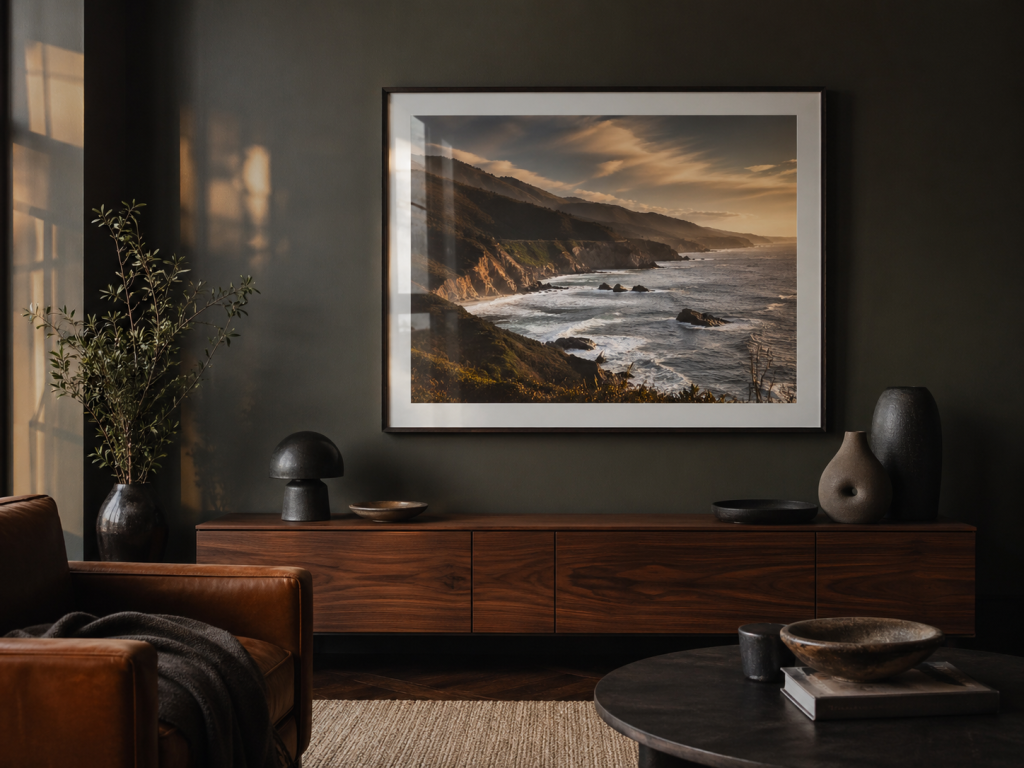
(Image: Moody living room with a large framed coastal scene above a wooden sideboard, displayed as a gloss paper wall print with warm evening light. Photo by VanVakarnee)
VanVakarnee prints are currently sold as prints only, without frames. This is useful because it gives you control over the final look.
If you choose gloss paper, framing becomes part of the design. A natural timber frame can make a print feel warm and relaxed. A black frame can create contrast and structure. A white frame can make the artwork feel light and gallery-like.
If you choose canvas, you may not need a traditional frame at all. Canvas already has texture and presence, so it can often stand alone.
Design Note: The frame should support the artwork, not fight it. If the image is already colourful or detailed, keep the frame simple.
The most common mistake is choosing the finish without thinking about the room.
A glossy framed print might look perfect online, but if it is placed opposite a bright window, glare could distract from the image. A canvas print might look beautiful as a large statement piece, but if the artwork relies on tiny details, gloss paper may show those details more clearly.
Avoid these common mistakes:
The right print finish should make the artwork easier to live with, not just easier to buy.
Choosing wall art online can be difficult because you are not only choosing an image. You are choosing how that image will behave in your home.
At VanVakarnee, our prints are available on canvas or gloss paper, with a range of sizes to suit different rooms and wall spaces. Whether you want a large canvas landscape for the living room, a framed gloss paper print for the hallway, or a calm nature piece for the bedroom, the goal is the same: wall art that feels considered, balanced, and worth looking at.
If you are unsure, start with the room. Look at the light, the wall size, the furniture, and the mood you want to create. Then choose the finish that supports that feeling.
Canvas gives you texture and presence.
Gloss paper gives you clarity and framing freedom.
Both can look beautiful when they are chosen for the right reason.
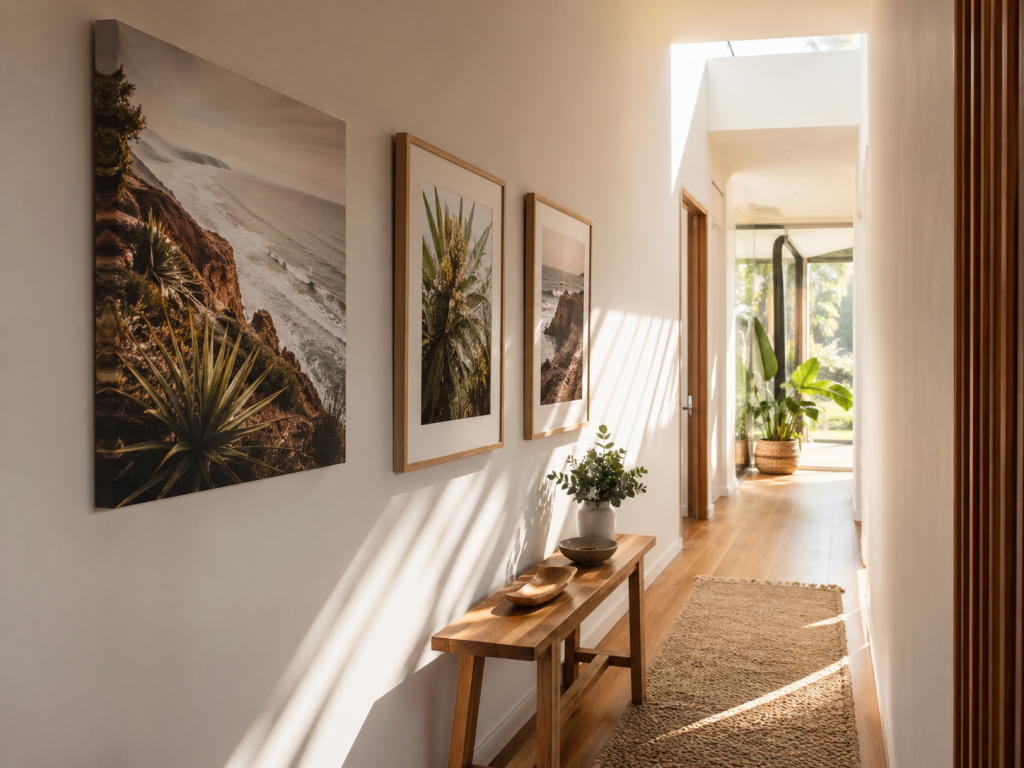
(Image: Bright hallway with framed coastal photography, featuring a large canvas wall print and two smaller gloss paper wall prints in natural wood frames. Photo by VanVakarnee)