When black and white prints work better than colour
Your living room already has its colours: the rug, the cushions, the timber floor. A black and white print gives the wall presence without…
By Angus W.
December 14, 2025 | 2:15 PM AEST
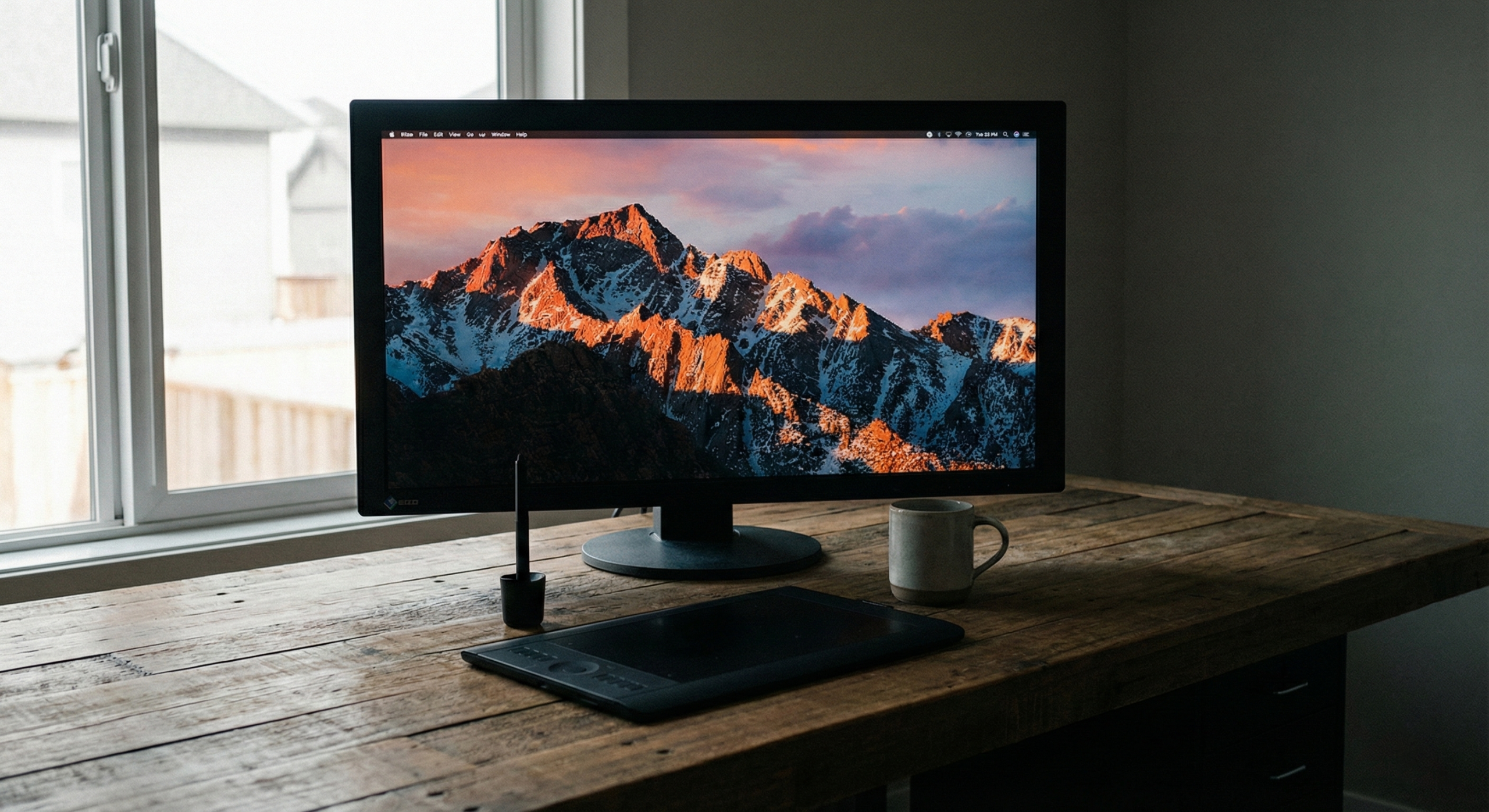
(Featured image: A creative workspace on a rustic wooden desk includes a monitor displaying a mountain landscape, a digital graphics tablet, and a ceramic mug. Photo by VanVakarnee)
Ah…. Editing Photos. We all know the feeling. You just wrapped an incredible shoot. The light was perfect, the compositions felt profound, and you are convinced you’ve captured images worthy of a gallery wall.
Then, you get home. You import the files into Lightroom. You stare at the first raw image, grab the exposure slider, and… sigh.
Suddenly, your phone feels magnetic. You check Instagram. You scroll through Reels of other photographers’ “perfect” lives. You answer an email. Twenty minutes later, you return to Lightroom feeling drained, bored, and creatively blocked.
Why does the actual creation of the art—the meticulous process of dodging, burning, and color grading—feel like such a slog compared to the instant gratification of scrolling?
It’s not because you are lazy. It’s not because you lack inspiration. It is entirely physiological.
According to recent neuroscience applied to creative work, your brain’s reward system is likely miscalibrated. The good news is that you can hack your own biology to make the difficult, nuanced work of editing feel addictive.
Here is the science of why you currently hate editing, and how to reset your brain to crave it.
The Science in Short: What is Dopamine Resensitisation for Photographers? Dopamine is often misunderstood as just a pleasure chemical; it is actually a focusing mechanism. We pay attention to whatever provides the most dopamine.
In the modern world, our brains are overstimulated by the “super-normal stimuli” of social media and instant entertainment. This desensitizes our dopamine receptors. When your baseline for stimulation is set that high, low-stimulation tasks—like subtle color grading or culling photos—feel excruciatingly boring. Resensitization is the process of lowering that baseline so that deep, creative work becomes rewarding again.
Imagine you just ate an entire bag of intensely sour, sugary candy. Immediately afterward, if you tried to sip a complex, aged Cabernet or appreciate the subtle flavors in a piece of high-quality dark chocolate, you wouldn’t taste a thing. Your palate would be blown out by the intensity of the sugar.
This is exactly what happens to your brain before you sit down to edit.
If you spend the hour before your edit session scrolling TikTok, watching intense YouTube videos, or reading polarizing news, you are flooding your brain with cheap, fast dopamine.
When you finally open Lightroom, you are asking your brain to switch from neon- flashing lights to a subtle, Rembrandt-style painting. Your brain, still vibrating from the high stimulation, looks at the raw photo and says, “This is boring. Give me the sugar again.”
To cure this form of creative block, we don’t need more inspiration. We need less stimulation.
We need to lower our dopamine baseline so that the subtle act of creating art feels satisfying. Here is the three-step protocol to make that happen.
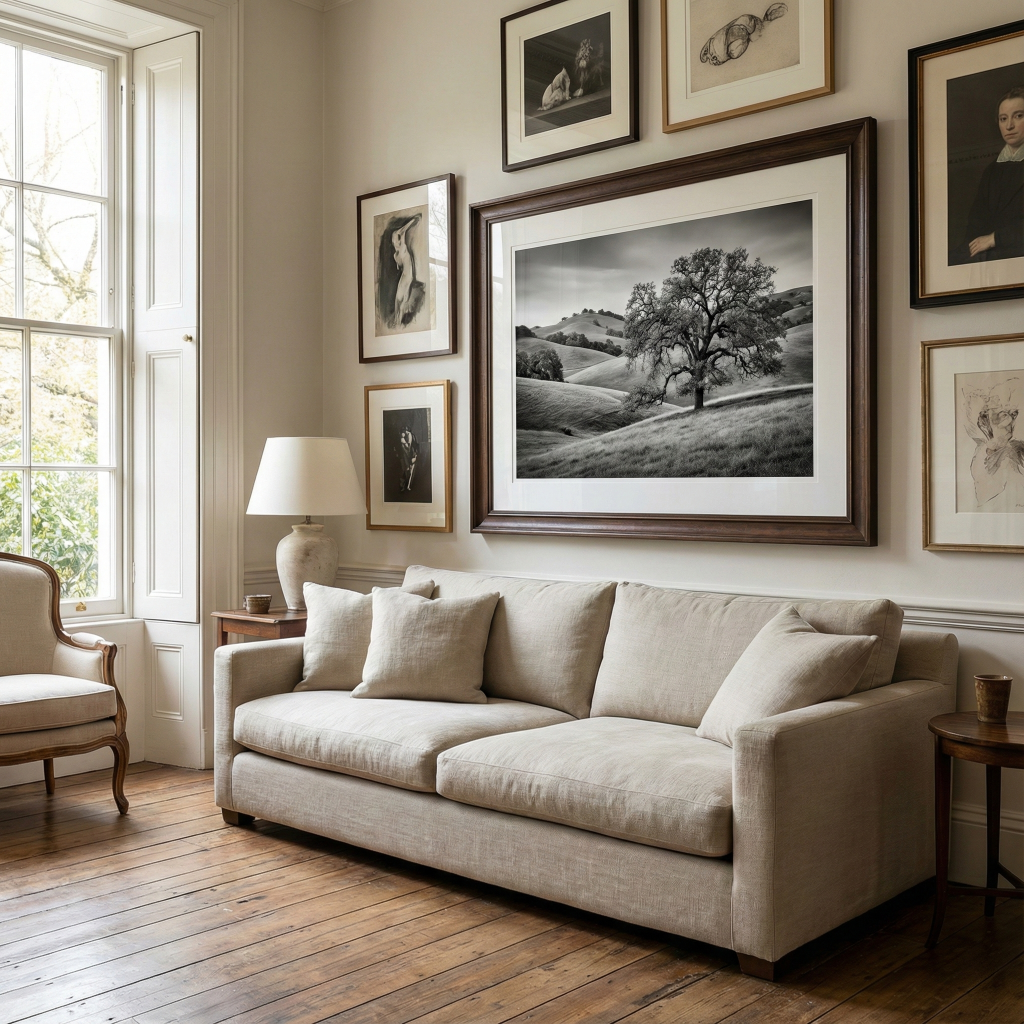
(Featured image: A sunlit living room features a beige sofa and wooden floorboards beneath a gallery wall dominated by a large framed black-and-white landscape photograph. Photo by VanVakarnee)
This is the most counterintuitive, yet most effective, technique for marathon editing sessions.
The Mistake: Most photographers take breaks that are more stimulating than their work. You edit for 30 minutes, feel antsy, and then spend 15 minutes scrolling Instagram Reels.
The Consequence: When you try to return to editing, the contrast is too high. The work feels harder than before because your brain just got a free dopamine hit without any effort.
The Hack: Take breaks that are significantly less stimulating than photo editing.
When you hit a wall in Lightroom, step away from the computer. Do not touch your phone. Instead:
Why it works: By depriving your dopamine-addicted brain of stimulation during the break, it will begin to starve for input. When you sit back down at your computer, the act of moving an HSL slider will suddenly feel incredibly engaging, because it is the most interesting thing available to your brain.
You are weaponizing boredom to force focus.
Creative block often hits before we even take the shot. We feel uninspired on location, unable to see unique compositions.
This often happens because we have trained our brains to fill every empty moment with digital noise. When waiting for the golden hour, waiting for a model to change, or standing in line for coffee, we pull out our phones.
To cultivate the type of mind capable of creating fine art, you must stop fracturing your attention.
As Rian Doris of the Flow Research Collective suggests, you must “inhabit the in-between.” When you are waiting, just wait. Stand in silence. Observe the light hitting a building. Look at the textures on the ground.
By lowering the noise in your brain during these transition moments, you regain the cognitive bandwidth necessary for creative ideas to bubble to the surface.
The final death knell for creative flow is multitasking.
If you are culling photos on one monitor while watching Netflix on the other, you are not being efficient. You are rapidly switching your brain between two different neural networks (the Default Mode Network and the Task Positive Network). This rapid switching creates cognitive lag and prevents you from ever entering a “Flow State.”
Treat your editing time with the same reverence you treat a shoot. Turn off notifications. Put your phone in another room. Close the fifty browser tabs you have open.
When you single-task, you allow your brain to dive deep into the nuance of the image. This deep dive is where the joy of editing lives—the satisfaction of turning a raw file into a printable piece of art.
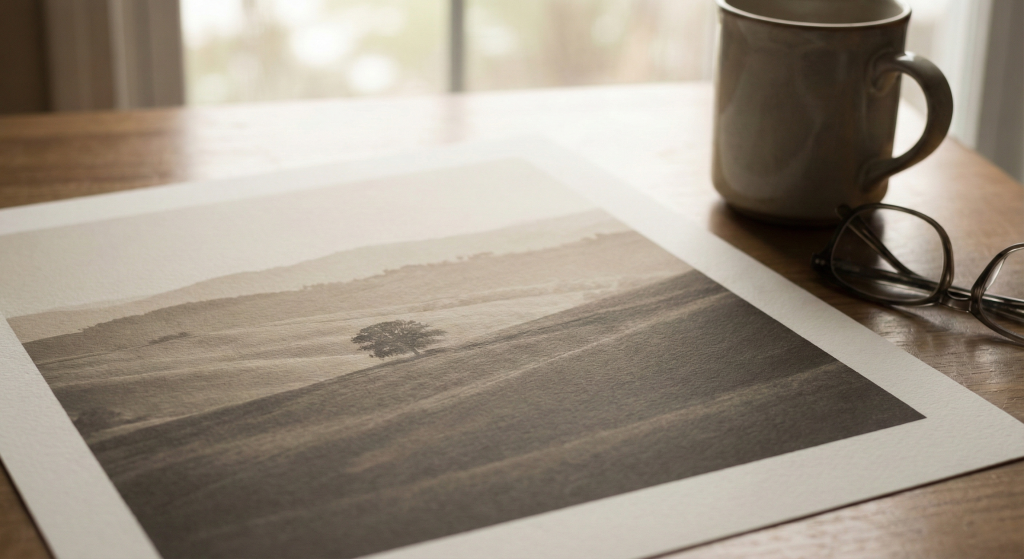
(Featured image: A monochrome art print depicting a lone tree rests flat on a wooden table beside a pair of eyeglasses and a coffee mug.. Photo by VanVakarnee)
In an economy driven by distraction, the ability to focus is a superpower.
The photographers who succeed in creating lasting, printable work aren’t just the ones with the best eyes; they are the ones with the most disciplined minds.
By controlling your environment and respecting your brain’s dopamine thresholds, you don’t just get more work done. You reclaim the joy of the process. Editing stops being a chore and returns to being what it always should have been: the second half of the creative act.
During your next edit session, try just one “Boring Break.” Put your phone in the other room, stare at a wall for five minutes, and see if Lightroom doesn’t look a little more inviting when you return.