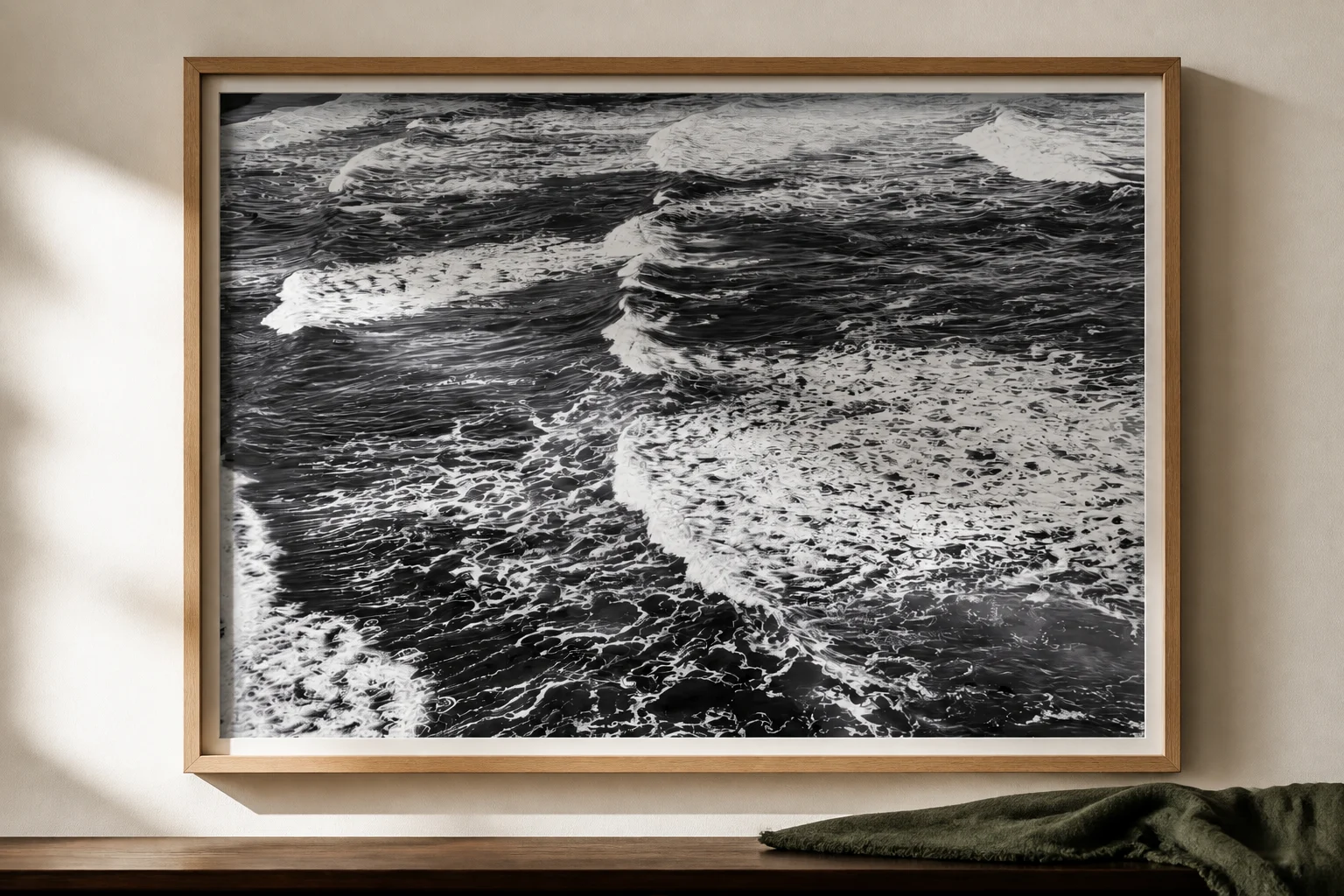
When black and white prints work better than colour
Your living room already has its colours: the rug, the cushions, the timber floor. A black and white print gives the wall presence without…
By Anne N.
Feb 6, 2026 | 10:30 PM AEST
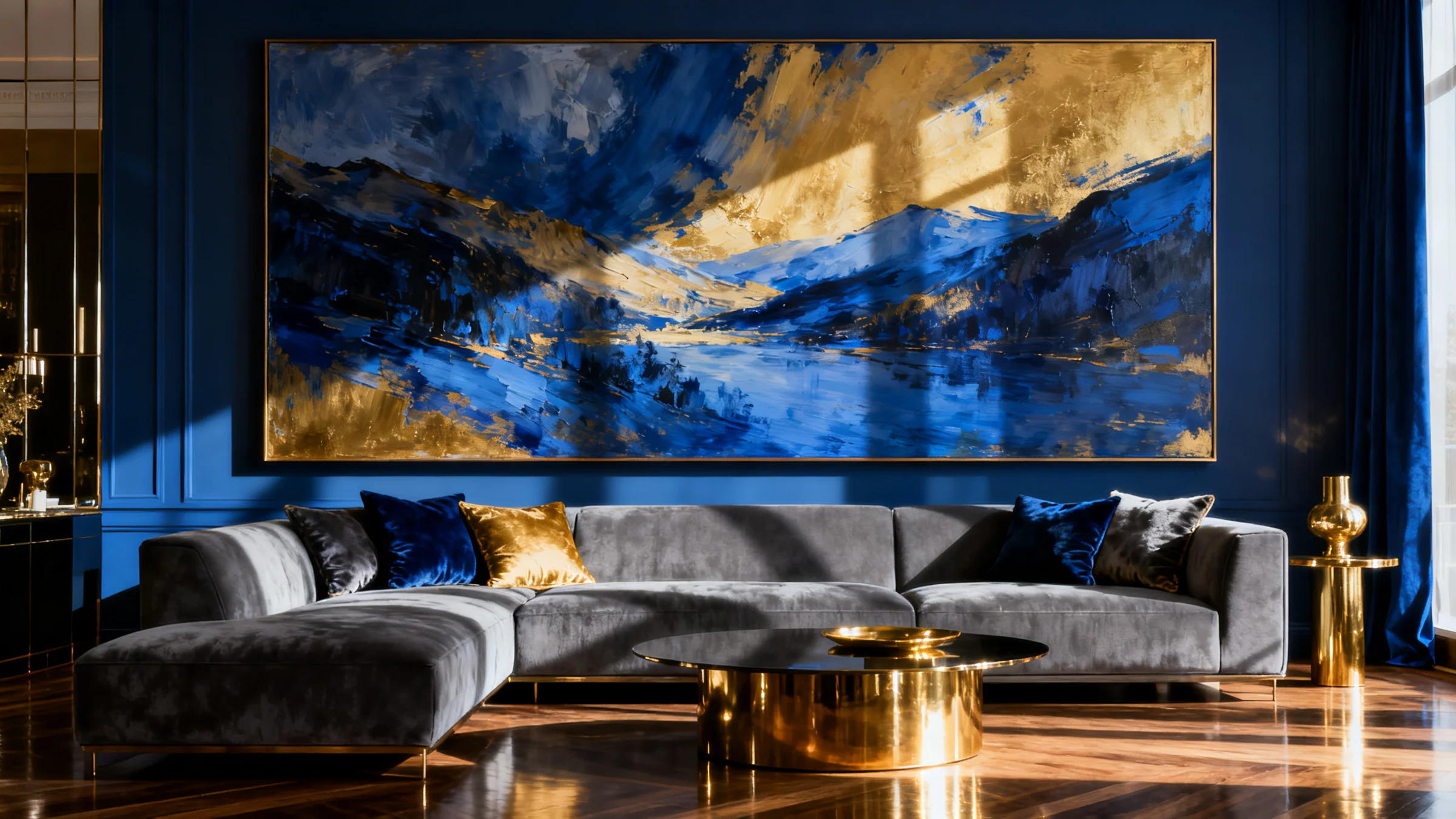
(Featured image: Oversized blue and gold abstract landscape painting in a gold frame, mounted above a grey velvet sectional sofa in a luxurious dark blue living room. Photo by VanVakarnee)
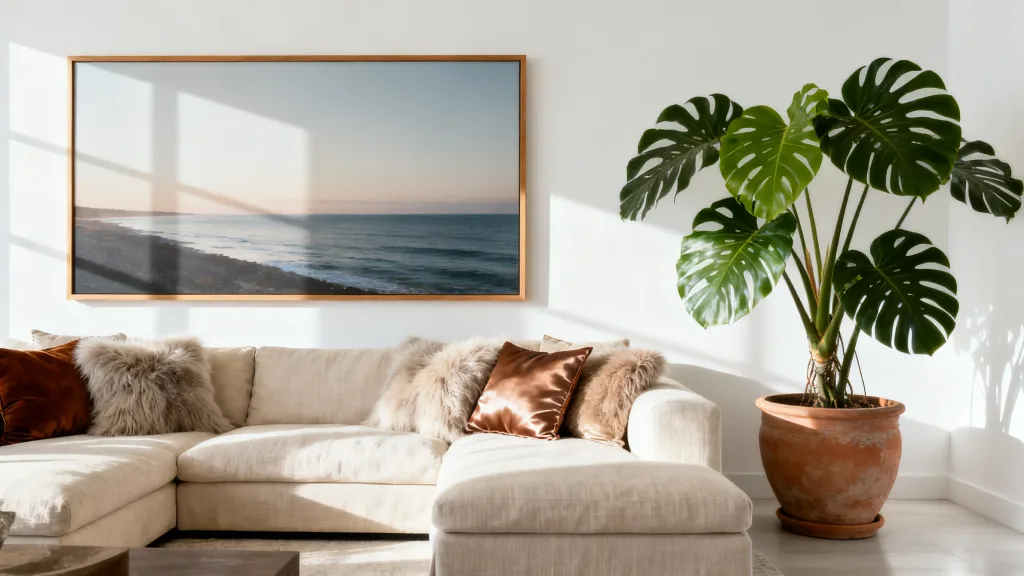
(Featured image: Large framed coastal seascape photography print hanging above a beige sectional sofa next to a large potted monstera plant in a bright, minimalist living room. Photo by VanVakarnee.)
Before worrying about subject matter, you must solve the math equation of your wall. The most common mistake homeowners make is buying art that is too small for the space, making the room feel cluttered or disjointed.
To achieve a balanced look, design experts rely on the 60-75% rule. Your artwork (or group of art) should cover 60% to 75% of the available wall space or the width of the furniture it hangs above. For example, if your sofa is 84 inches wide, your artwork should be between 50 and 63 inches wide.
The shape of your wall dictates the orientation of your art.
| Furniture Width | Ideal Art Width (Single Piece) | Gallery Wall Width (Total) |
| King Bed (76″) | 46″ – 57″ | 50″ – 60″ |
| Queen Bed (60″) | 36″ – 45″ | 38″ – 50″ |
| 3-Seater Sofa (84″) | 50″ – 63″ | 55″ – 65″ |
| Console Table (48″) | 29″ – 36″ | 30″ – 40″ |
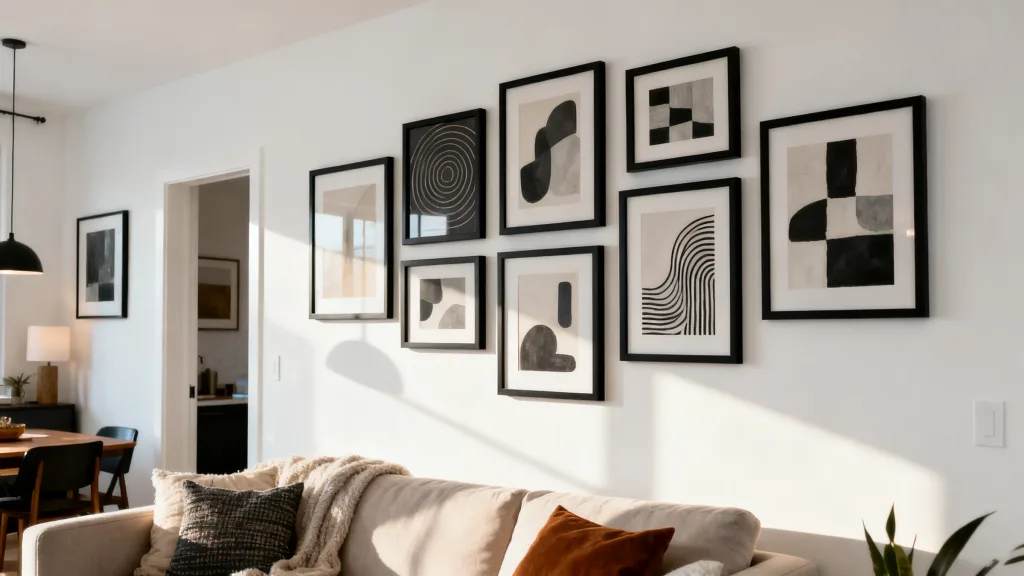
(Featured image: Black-and-white abstract gallery wall with nine framed prints arranged above a beige sofa in a bright, modern living room. Photo by VanVakarnee.)
A common myth is that “real” art requires a gallery budget. In reality, accessible prints and high-quality canvases allow you to define your aesthetic affordably. When determining your style, look at your existing furniture and color palette.
Traditional: Landscapes, portraits, and oil painting reproductions work best. Gold or wood frames add necessary weight.
Modern & Minimalist: Look for black and white photography, line drawings, or abstract color blocks. Less is often more here.
Boho & Eclectic: Embrace nature prints, botanicals, and warm earth tones. Texture is key, so consider canvas prints without glass.
If you are budget-conscious, focus on high-quality paper prints that you can frame yourself. Buying standard-size prints (like 18×24 or 24×36) allows you to purchase affordable, ready-made frames rather than paying for custom framing.
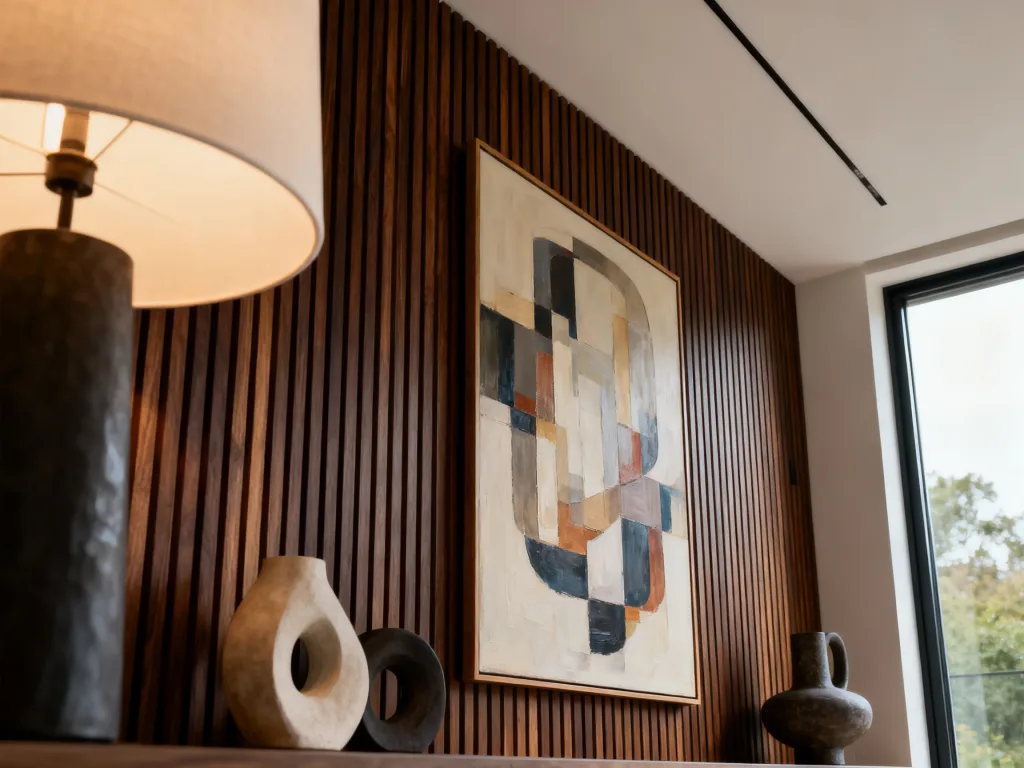
(Featured image: Modern abstract painting in a slim wood frame on a dark wood slat feature wall with sculptural ceramics and soft ambient lighting. Photo by VanVakarnee.)
Different rooms serve different psychological functions, and your art should reflect that. What works in a high-energy kitchen often clashes with a restful bedroom.
As the primary gathering spot, this room often features the home’s most expansive empty wall, leading many homeowners to wonder, “what wall art should I buy?” to properly anchor the space. Aim for one large statement piece or a cohesive gallery wall that serves as a deliberate focal point. The subject matter should be engaging but not controversial think abstract landscapes or large-scale photography that spark dialogue while harmonizing with the room’s energy.
The goal here is relaxation. Avoid high-contrast colors like bright reds or chaotic patterns. instead, opt for soothing blues, greens, or neutrals. Minimalist landscapes or soft botanical prints promote rest.
These are transitional spaces. Use a series of smaller matching pieces arranged in a grid or a row to create a sense of rhythm and movement as you walk through the home.
Even the most beautiful masterpiece will look wrong if hung incorrectly. The “eyeball method” is unreliable; use a measuring tape instead.
Museums and galleries hang art so that the center of the artwork is exactly 57 inches from the floor. This represents the average human eye level.
If you are combining multiple pieces, treat the whole arrangement as one single unit. Space the frames 2 to 3 inches apart. Consistency in frame style or color helps unify disparate images.
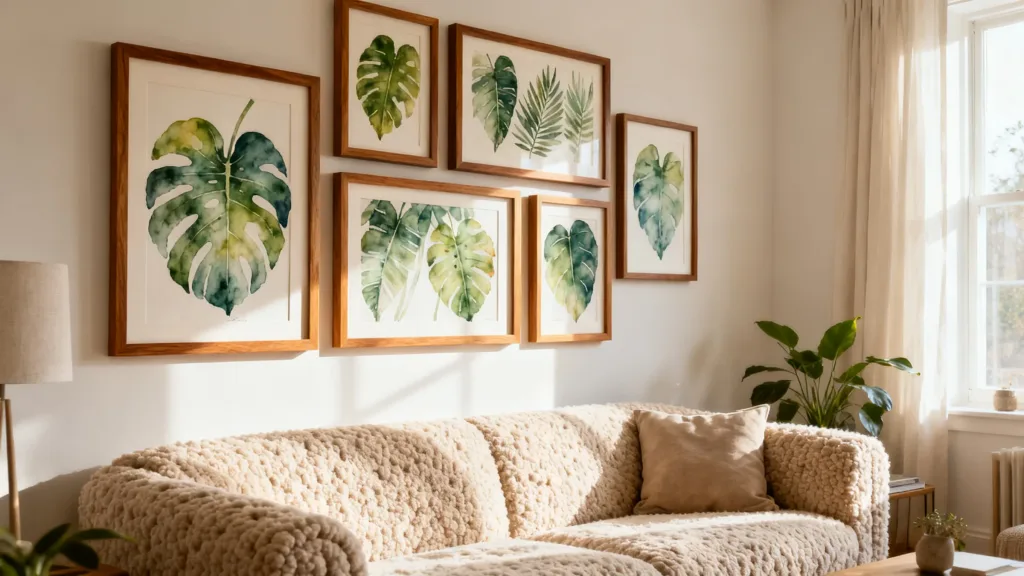
(Featured image: Botanical gallery wall with framed green leaf prints in warm wood frames above a cozy cream sofa in a sunlit living room. Photo by VanVakarnee.)
Finding the right piece is less about following trends and more about mastering the architecture of the room. When you find yourself asking, “What wall art should I buy?” start by looking at your home’s existing “visual weight” the balance of furniture, light, and open space. A high-quality interior should feel curated, not decorated; look for pieces that echo the textures in your home, such as a moody oil painting to complement velvet upholstery or a crisp, botanical line drawing to soften a modern glass table.
True magazine-quality spaces rely on the “focal point” principle. Your art should serve as the room’s anchor, drawing the eye toward a central destination. If you are stuck, lean into the storytelling aspect of design: select art that reflects your personal history or travel, but ensure it is presented with professional intent. High-quality matting and substantial framing can elevate a simple paper print into a sophisticated gallery-grade statement.
No. Design experts advise against perfect matching, as it can make a room look like a catalogue. Instead, coordinate with the room’s undertones. If your room has cool tones (blues, grays), choose art with similar cool hues, but don’t worry about matching the exact fabric color.
To determine “what wall art should I buy,” prioritize pieces that occupy 60-75% of the available wall space to create an anchored, designer-level focal point. Elevate your space by choosing art that mirrors your home’s existing color palette and textures, ensuring the piece feels like an organic extension of the room’s architecture.
Renters should focus on lightweight prints and canvases. Use adhesive hanging strips (like Command strips) that don’t damage paint. Large-scale tapestries are also an excellent option for covering white walls without using nails.
The golden rule is that art should cover 60% to 75% of the available wall space or the furniture it hangs above. If a piece is too small, it will look like it is floating aimlessly.
Yes, but with caution. Mixing frames works well in “eclectic” or “boho” styles. For a cohesive look, keep at least one element consistent—such as using all black mats, or sticking to frames of similar visual weight.
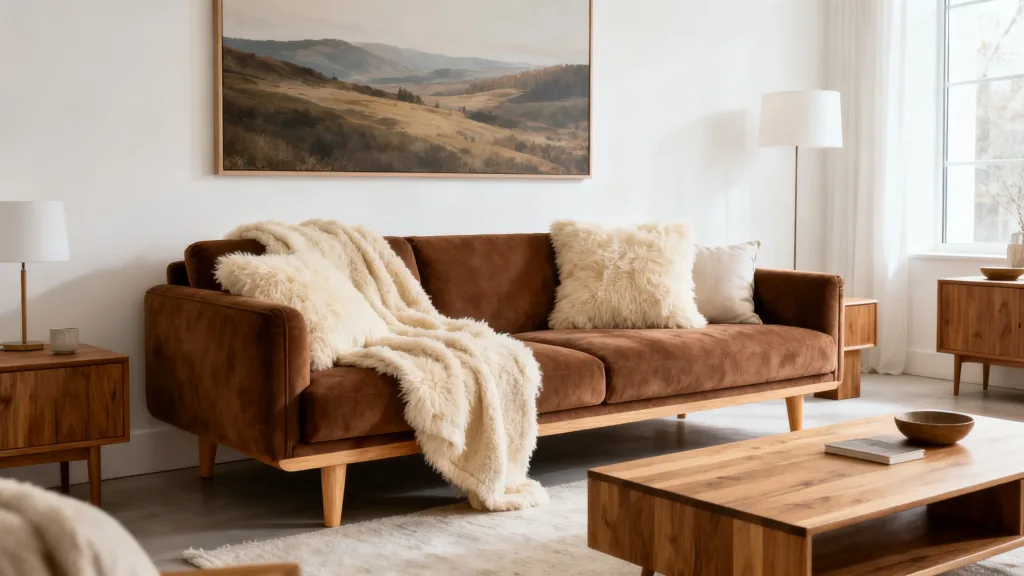
(Featured image: Large framed landscape wall art above a brown suede sofa with cosy cream throws and wooden furniture in a bright living room. Photo by VanVakarnee.)
Choosing wall art doesn’t have to be a source of stress. By applying the 57-inch hanging rule and ensuring your art fills 60-75% of the space, you eliminate the technical errors that make walls look awkward. Whether you choose a calming landscape for the bedroom or a bold abstract for the living room, trust your instinct. If a piece makes you happy when you look at it, it belongs in your home.
Ready to start your gallery? Which room in your house is currently the most in need of a transformation?